AI is reshaping the business world at a tsunami-like pace, while IP, like a calm undercurrent, continues to influence human cognition and emotional structures over a longer period.
In the context of rapid AI model iteration and a shrinking window of opportunity for technological dividends, what truly determines a brand's ability to weather economic cycles is not the technology itself, but whether the brand possesses a core value that can be trusted and repeatedly chosen in the long term. This is precisely the key issue that Chinese brands must confront as they enter the second half of their global expansion.
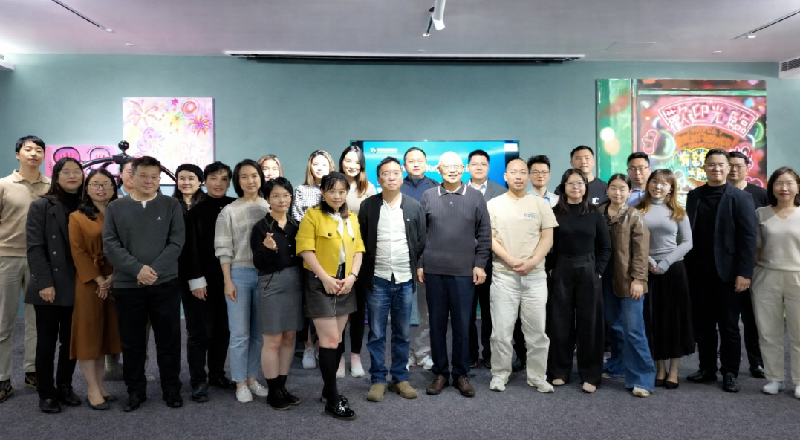
On January 16th, the "How AI and IP Reconstruct Overseas Consumer Brands" CEO Roundtable (Second Session), hosted by Kotler Marketing Group, was successfully held in Shenzhen. This event was also an offline exchange meeting of the second phase of the “Global Brand Growth Strategy Program for Asian Business Leaders (GBGSP)" program, attracting many founders and executives from companies in the consumer goods, consumer electronics, AI, and new manufacturing sectors.
Around the core theme of "the second
half of going global", the participants engaged in a high-density, highly
practical in-depth discussion from multiple dimensions such as brand, product,
technology, organization and globalization awareness.
—— Kotler Growth Lab
 Chen Gelei|The prerequisite for IP is not creativity but reputation
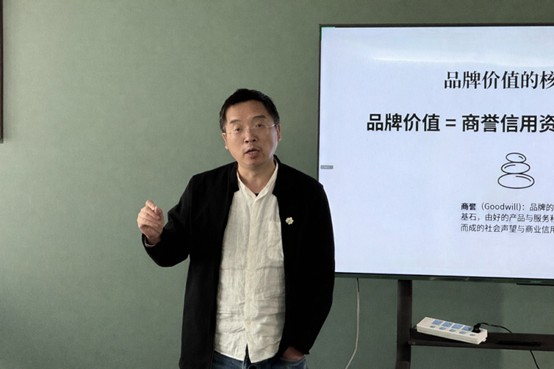
Chen Gelei, a renowned Chinese IP expert and founder of cultural IP, draws on his own experience in advertising, IP incubation, and brand practice to make a highly impactful judgment: the first principle of a brand is not IP, but goodwill.
In his view, the logic of building brand image through high-frequency exposure, prevalent in the traditional advertising era, is systematically failing. Today's communication environment is highly fragmented and decentralized; consumers can more easily identify packaging, but are less easily persuaded. What truly sustains a brand's long-term value is the social trust built through product strength, service quality, and consistently fulfilling promises.
Based on this assessment, Chen Gelei further points out: " The essence of IP is not to create an image, but to transform scattered goodwill into a perceptible and communicable cultural asset ." IP can be a story, an image, or even a meme; it can be diverse, fragmented, and constantly evolving through trial and error. Rather than clinging to a single, perfect brand expression, it's better to let goodwill grow naturally within different circles.
 Wang Liting|In the AI era, reputation is a battleground

Wang Liting, a renowned expert in overseas IP and in-depth content marketing and co-founder of Zhiwai Global, draws on her extensive experience in managing overseas content and reputation to systematically analyze the changing trust mechanisms of brands going global in the AI era.
She pointed out that as AI search and generative recommendations become new information gateways, brand communication is shifting from "being seen" to "being cited ." In this context, content strategy in overseas markets is essentially a long-term trust-building project, rather than a short-term campaign.
Focusing on core platforms such as Reddit, Twitter, and LinkedIn, she emphasized that different platforms play different roles in brand globalization: some platforms are more focused on genuine discussions and user feedback, some serve as industry endorsements and influence decision-making, and others directly affect search and recommendation results. Truly effective overseas reputation building relies on long-term, evidence-based content accumulation, rather than one-off traffic-driven strategies.
Chen Guojin | It's not about empowering, it's about restructuring

Chen Guojin, a renowned Chinese brand positioning design expert and founder of Chen & Chen Brand Positioning Company, proposed a more fundamental perspective for reflection: with AI deeply involved in business decision-making and brand expression, the focus of today's discussion is no longer on which theory is more advanced, but rather on whether the original brand operation logic still holds true.
He pointed out that brand building is shifting from a competition of methodologies to a competition of organizational capabilities, systemic understanding, and long-term execution . Rather than discussing how AI can empower brands, it's more worthwhile to consider whether brands need to be redefined, rebuilt, and re-operated.
Li Mengmeng|Brands are moving from definers to co-creators

OhPlay’s CMO Li Mengmeng, shared a highly relevant trend prediction based on her real-world experience in consumer electronics and AI products: "The brands of the future will no longer be unidirectionally defined brands, but brands that are continuously co-created by users."
In her practice, products are not designed all at once, but continuously evolve based on real user feedback. Functionality, experience, structure, and even product direction are rapidly adjusted based on user suggestions, sometimes even undergoing high-frequency iterations. This logic is particularly important in overseas markets. Compared to making decisions based on guesswork, "crowdfunding overseas first, testing demand first, and then developing the product" is becoming a more certain path.
Regarding AI applications, she also pointed out that domestic experience cannot be simply replicated in overseas markets—model selection, platform ecosystems, and user habits all need to be re-understood . However, precisely because of this, she remains highly confident in the long-term potential of the AI × consumer electronics × user co-creation combination in overseas markets.
Tiger Cao|The second half of going
global is a battle of cognition and systemic capabilities

At the end of the event, Tiger Cao, Global Partner of Kotler Marketing Group and an internationally renowned marketing strategy expert, systematically summarized and expanded upon the entire discussion.
He pointed out that Chinese enterprises are entering a period of moderate growth, and even some sectors experiencing contraction. In this environment, the growth logic centered on "maximizing market share" is no longer applicable; enterprises must shift towards improving "profit, cash flow, and high-quality total factor productivity." "Scale comes from domestic markets, but most profits come from overseas. "
China possesses globally leading capabilities in new supply chains—electrification, intelligentization, hardware and software integration, new materials, and design—which are becoming a crucial foundation for moving towards the high end of the global value chain. However, technological innovation does not automatically translate into commercial success. Only by truly understanding consumers' emotional needs, identity, and cultural context can technology be transformed into sustainable brand value.
Tiger Cao emphasized that going global is no longer the same as cross-border e-commerce or sales on a single platform, but a systematic project encompassing "product premiumization, brand narrative building, channel diversification, and organizational hybridization."
In uncertain times, what is truly scarce is not information, but the ability to penetrate consensus, continuously upgrade cognition, and put it into action.