
The field of marketing research in 2025 is very interesting. Researchers are working hard to solve problems we encounter in real business and are focusing on the practical application of many hot technologies and theories in marketing. Below are 10 valuable research findings from global marketing academic journals.
1. Dynamic visual content captured by drones can significantly enhance consumers' emotional connection to hotels, thereby changing their booking decisions.
Many hotels and tourist attractions are wondering how to make their promotional videos more appealing. Some researchers have considered whether using drones, with their widespread availability, to tell stories from an aerial perspective could be more engaging than traditional ground-based filming.
They conducted an experiment, filming two
versions of the video and collecting feedback. The results showed that the
aerial, dynamic perspective offered by drones did indeed create a more
impactful experience, encouraging people to explore in person and thus
increasing booking intent. Therefore, if your business is related to scenery or
spatial experiences, investing in high-quality aerial promotional videos may
yield results beyond your expectations.
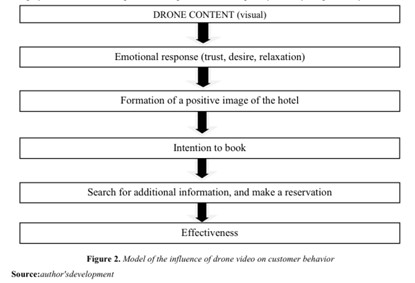
The image, taken from the original paper,
illustrates a model of the impact of drone video on customer behavior. It uses
arrows to indicate the complete psychological and behavioral chain from
"drone content (visual)" to "final booking." This can be
understood as follows: customers first see a hotel promotional video shot with
a drone, then are gradually "led" by the video, and finally place an
order.
Source:Olha Kotova, “Elevating Hotel Marketing: The Behavioral Impact of Drone-Based Visual Storytelling", International Journal of Research in Tourism and Hospitality (IJRTH), Vol. 11, No. 1, 2025, pp. 32-40.
2. In social media marketing, "nano influencers" with very few followers (<10,000) are often more effective at driving sales than big-name celebrities.
When it comes to winning people over, consumers are becoming increasingly discerning and less easily swayed by advertising and celebrity endorsements. This has led to the rise of another force – "nano influencers" who may only have a few thousand followers, but are highly niche and authentic.
A study
carefully compared the effectiveness of influencers of different sizes and
found that these "nano influencers," due to their close interaction
with fans and sincere recommendations, have extremely high fan trust, and their
interaction rates and actual sales conversion rates often surpass those of bigger
named celebrities or creators with countless fans. This is good news for small
and medium-sized brands with limited budgets: instead of spending heavily on
hiring a celebrity, collaborating with a group of nano-influencers with similar
styles may yield more practical results.

The image is taken from the original paper.
This table categorizes "influencers" into four levels based on their
number of followers and compares six key metrics, including follower count,
engagement rate, authenticity, cost of advertising, reach, and primary
objectives, helping brands determine "who is the most cost-effective to
hire for product promotion."
Source:Toan Do, “Influencer Marketing 2.0: The Rise of Nano-Influencers in Digital Consumer Landscape", European Journal of Business and Innovation Research, 2025, pp. 1-9.
3. Using generative AI models for marketing data prediction can significantly improve campaign conversion rates.
Major brands also have their own high-tech weapons. For example, AI is no longer just a chat tool. Research teams are trying to use generative AI models like GPT-5.2 to predict the effectiveness of marketing campaigns. Traditional data analysis sometimes struggles to grasp particularly complex and subtle consumer patterns, but AI can uncover patterns that are difficult for the human eye to perceive. This research demonstrates through real-world examples that AI-based predictions can make advertising more precise and inventory management smarter, essentially equipping marketing with a "high-precision radar."
For large enterprises, it is recommended to invest in building an AI predictive analytics team or introduce third-party AI solutions to optimize ad placement and inventory management.

The image, taken from the original paper,
illustrates the entire process of "using machine learning for customer
segmentation and marketing guidance" as a pipeline, consisting of nine
steps: introduction, data collection, data preprocessing, data splitting, model
training, model evaluation, customer segmentation (segmenting customers into
three tiers based on model results: high, medium, and low customer lifetime
value; this step directly identifies "who are the big customers, who are
at risk of churn, and who have potential"), and marketing strategy
integration (differentiated operations for the three groups).
Source:Santosh Lal et al., “AI-Driven Predictive Analytics for Marketing Campaigns", International Journal of Information Technology and Computer Engineering, Vol. 13, No. 1, 2025, pp. 52-58.
4.With the assistance of AI, previously abstract style preferences, emotional tendencies, and scenario requirements are gradually becoming identifiable and accessible.
In the AI era, understanding people's minds requires not only data, but also an understanding of those "unquantifiable" aspects—such as people's aesthetic preferences and lifestyle choices.
This report, produced by RedNote in collaboration with global trend forecasting agency WGSN, systematically studied the aesthetic preferences of contemporary consumers and discovered some interesting patterns.
For example, research has found that people's aesthetic preferences are actually relatively stable and follow certain patterns—often rooted in cultural background, time period, geographical environment, and psychological state. The popular styles in recent years, such as "intellectual style," "gray style," "old money style," and "high-intelligence dressing," all reflect the recognition and pursuit of a rational, restrained, and intellectual atmosphere by specific groups.
While the level of discussion surrounding certain styles may fluctuate from time to time, this does not mean they have disappeared, but rather reflects the diversity and fluidity of the aesthetic ecosystem. For example, the "country style" continues to exist in specific communities, while "high-end luxury," "sweet and cool," and "professional sportswear" each have their own stable audiences.
These styles are not merely fashion labels, but rather an outward expression of a lifestyle. They are deeply intertwined with emotions and contexts, collectively forming an "aesthetic language" through which a person chooses products and understands themselves. The rise of "healing aesthetics" resonates with people's emotional needs for comfort and soothing under pressure; while "future aesthetics" embodies a yearning for technology and the unknown.
For brands, understanding these aesthetic principles means being able to design products, create scenarios, and tell stories more precisely—no longer just selling a piece of clothing or a cabinet, but providing an aesthetic identity and lifestyle solution. Whether it's designing a cat house for cat owners in the entryway or adding a finishing touch of furniture to a vintage-style home, it's essentially responding to a certain "lifestyle request."
Understanding aesthetics means understanding why a group of people choose to live this way and how they want to be seen. With the help of AI, these originally abstract style preferences, emotional tendencies, and scenario needs are gradually becoming identifiable and accessible, opening up an infinite game for brands to "converse with people's hearts."

Source: Related research published by RedNote: https://mp.weixin.qq.com/s/50wBeICPAD4_CMHMhbAHbQ?scene=1
5. Hesitation Reveals True Feelings: In price negotiations, the speed of your reaction reveals your true intentions.
Have you ever noticed whether the other person replies to your request instantly or after a while when you're bargaining for something online? This subtle difference might quietly reveal their true thoughts.
Traditional economic theories often assume that everyone has a pre-set strategy when bargaining, enabling them to quickly make the most advantageous decision for themselves. However, in the real world, we often weigh the options repeatedly in the moment: Is this price appropriate? Should I accept it?
One study aimed to understand whether the speed at which a person responds during online negotiations inadvertently reveals whether they consider the offer "good value" or "cheap." And could this timing signal, in turn, influence the final transaction outcome?
Researchers began by conducting an "archaeological experiment"—they examined a large number of historical negotiation records on eBay between 2012 and 2013. The results revealed an interesting pattern: both buyers and sellers tended to take longer to accept an offer that was less favorable to them; similarly, they hesitated longer to reject an offer that was actually quite good. This suggests that people don't simply execute strategies coldly, but rather weigh the options repeatedly in their minds, and the time spent on this weighing itself becomes a kind of "honesty signal."
Looking at historical data alone wasn't enough; they also conducted a "live experiment" on eBay, proactively sending sellers offers of varying magnitudes to precisely test the causal relationship between response time and the quality of an offer. The results of the experiment corroborated the historical data: response speed does indeed reflect a person's true evaluation of a offer.
To gain a deeper understanding of this decision-making process, the study also employed the "drift-diffusion model" from psychology and behavioral economics. This model is like having a small internal scale; we continuously add "evidence" of acceptance or rejection to both sides until one side is sufficiently heavy before making a decision. Analysis shows that experienced sellers' "scales" tip faster, making them more likely to accept offers and resulting in a more decisive decision-making process.
The study also captured a counterintuitive phenomenon: if buyers receive a slow, deliberate rejection after making an offer, they are less likely to continue negotiating and may simply turn to other sellers; however, if the rejection is swift, they are more likely to make further offers. This differs from traditional economic predictions—in reality, people seem to be more sensitive to "hesitant rejections" and more prone to losing patience.
This study is quite interesting; it reminds us of two things:
First, in real negotiations and interactions, people are often adaptable in real time, rather than always playing by the script;
Secondly, time itself speaks volumes, and the speed of reaction has become an unconscious strategic signal, whether in online negotiations or other situations where it is necessary to judge the other party's intentions.
The next time you encounter a message saying "read but no reply" or "typing...", you might realize that the silence and waiting may be carrying unspoken messages.
Source:Zhao, W. J., & Krajbich, I. (2025). Deliberation during online bargaining reveals strategic information. Proceedings of the National Academy of Sciences (PNAS), 122(7).
6. "Visible" Brand Value: Why is Traditional Advertising More Favored in Mergers and Acquisitions in the Digital Age?
A brand's value is often reflected in its "intangible assets," but in crucial transactions like mergers and acquisitions, how do you measure the true worth of an invisible brand? Traditionally, total advertising expenditure has been used as an indicator of brand strength. But today, advertising channels are vastly different—from television advertising to social media feeds, to targeted paid search—do they still contribute the same amount to brand value?
One study specifically explored this issue. Instead of looking at a general overview of advertising spending, the researchers categorized advertising expenditures into three types: traditional advertising (such as television and radio), online display advertising (such as webpage banner ads), and paid search advertising. They wanted to determine which type of advertising investment was more likely to formally recognize brand equity as a valuable intangible asset and assign it a higher valuation on the books when a company is acquired.
By analyzing proprietary data, the study reached an interesting conclusion: compared to paid search advertising, which offers direct results and aims for immediate conversions, investments in traditional advertising and online display advertising are more likely to be identified as independent brand assets in mergers and acquisitions, and their assessed value is also higher.
The underlying logic may be related to the characteristics of different types of advertising. Traditional advertising and display advertising are more like long-term "reputation investments" that shape brand image and awareness. Their effects are more lasting and are more easily recognized by the external market (including investors and evaluation agencies) as the core value of the brand. While paid search advertising has high conversion efficiency, its effects are often seen as short-term and tactical, linked to specific keywords, and are less likely to be transformed into long-term brand assets that can be clearly identified and valued.
Even more interestingly, the study also found that market investors respond more positively to companies’ investments in traditional and display advertising, which indirectly confirms that the brand equity built by this type of advertising has real economic value.
Therefore, this study serves as a reminder to business managers: when setting advertising budgets, if long-term brand value and future asset identification (such as in mergers and acquisitions or financing) are important considerations, then maintaining or even strategically investing in brand-building advertising (whether traditional or online) may be a more strategic investment than simply pursuing immediate results with digital advertising.
Source:Song, X. S. (2024). Digital vs. Traditional Advertising and the Recognition of Brand Intangible Assets. Management Science, 71(3), 2035–2055.
7. Generative AI can not only generate copywriting, but also simulate human sensory preferences (such as taste and smell) to help product innovation.
AI's creativity is beyond imagination. It can be a huge help even in the product development stage. For example, if a food company wants to launch a new flavor, the traditional approach involves extensive consumer testing, which is costly and slow. Now, researchers have developed a sensory analysis framework based on generative AI that can simulate potential human preferences for taste, smell, and even packaging. This breakthrough means that companies can conduct extensive "taste testing" in virtual environments, significantly reducing upfront trial-and-error costs and making innovation faster and more accurate.
For food and beverage companies, it is recommended to introduce AI tools to conduct "virtual trials" of new flavors and then optimize them in conjunction with actual testing.

The image, taken from the original paper,
breaks down a psychology/consumer study that involves "designing
experimental stimulus materials first and then collecting questionnaire
data" into 3 major stages and 9 steps: "First, think about the
questions and hypotheses → then make video/image/questionnaire materials and
test the effectiveness of the materials back and forth → finally distribute
questionnaires on a large scale to obtain data."
Source:Kosuke Motoki et al., “Generative AI framework for sensory and consumer research", Proceedings of the National Academy of Sciences of the United States of America, 2025, Article e2316025120.
8. Although chatbots can significantly reduce costs, they cannot completely replace human customer service in complex situations; a hybrid model is the best option.
AI is also transforming customer service.
It's a consensus that chatbots can resolve issues 24/7 and significantly reduce
costs. However, a comparative study reminds us that chatbots are prone to
getting stuck when faced with complex or emotionally charged questions. The
study found that the optimal solution is actually a "human-machine
collaboration" model: let AI handle common, standard questions, and
seamlessly transfer to human customer service when encountering complex
situations. This ensures efficiency without sacrificing the warmth of the
service.

The image is taken from the original paper. This table compares "AI chatbots" and "human customer service" across seven core metrics and provides "contextual tips"—telling you the background information behind the numbers.
Source: Vijay Kumar Sridharan, “The Role of Chatbots in Customer Service: Can AI Truly Replace Human Agents?", International Research Journal of Innovations in Engineering and Technology (IRJET), 2025, pp. 82-88.
9. In marketing strategies, the choice of "default join" or "default opt out" can greatly influence consumers' behavioral choices, and the wording is crucial.
In marketing, some small details can have a big impact. For example, when asking users to choose whether to subscribe to or agree to a service, do you default to "agree" (requiring manual cancellation) or "disagree" (requiring manual selection)?
A behavioral experiment has demonstrated that this "choice framework" design can significantly impact the final outcome. Adopting a "presumed agreement" default option can significantly increase user engagement, but researchers also caution that it must be used ethically and legally, otherwise it may damage brand reputation.
Source:Romain Cadario et al., “Express: Beyond Opt-Out: How Presumed-Consent Language Shapes Persuasion", Journal of Marketing, 2025.
10. Providing high-quality inbound marketing can significantly enhance brand loyalty in tourist destinations.
Attracting new tourists and retaining existing customers is always a challenge for the tourism industry. A study of Indonesian tourist destinations suggests a strategy: focus on "inbound marketing"—that is, attracting tourists to actively engage and visit by creating high-quality content and engaging on social media. The study found that this content- and experience-based marketing not only brings in new tourists but also effectively enhances tourist loyalty, encouraging repeat visits and referrals.
Therefore, it is recommended that tourism businesses or destination authorities invest in content creation and social media operations to build unique tourism experience brands.

Source:Fadli Adnin Nasution et al., “Attractive inbound marketing on tourist loyalty at tourism destination in Indonesia", Innovative Marketing, Vol. 21, Issue 2, 2025.
Looking at these academic studies from 2025, whether exploring cutting-edge technology or insights into human nature, they all ultimately point to the same goal: to better understand consumers and build more genuine and effective connections with them. It is hoped that these findings from the forefront of academia will provide some practical inspiration.