Preface
At the
final meeting before the launch of a flagship new product—one into which
substantial R&D resources have been invested—the discussion often quickly
narrows to just a few questions: When should it go live? How much inventory
should be prepared for the first batch? How should Amazon advertising be run?
What ROAS should be achieved in the first month?
The R&D team may have spent months discussing new structures, algorithms, and materials, while the product team may also have conducted extensive competitor analysis and user research. Yet when all of this is handed over to the marketing, e-commerce, and sales teams, what ultimately remains is often little more than a specification sheet, a few comparison charts, and a launch discount.
This is not because companies do not value innovation. Quite the opposite: Chinese companies are rapidly improving their ability to create innovative products.
The real problem is that companies are becoming increasingly skilled at creating product value, but have not become equally skilled at continuously managing that value in global markets—helping overseas consumers understand what problem the product solves, believe that it genuinely performs better, choose it and continue using it, and be willing to pay a reasonable premium for meaningful differentiation.
In our work with companies expanding overseas, we repeatedly see that when an innovative product fails to gain traction internationally, the cause is rarely simply that an advertisement was poorly made or a particular channel was chosen incorrectly. Value is gradually lost across a chain of activities: user insights fail to enter product definition; product concepts are not revalidated in the target market; R&D language is not translated into value that consumers can understand; off-platform content and platform transactions operate separately; and post-launch data struggle to answer where the next round of budget should be invested.
The result is that companies invest more in R&D and genuinely make better products, yet the market side remains dependent on competition over specifications, price and traffic. R&D investment rises, but the value that users are willing to purchase is not fully expressed, much less continuously accumulated into brand trust and the capability to support the next round of innovation.
What we call a “high-value innovative product" is not simply a product with a higher price or newer technology. First, it must address a set of important and insufficiently satisfied needs, creating clear additional value for users in terms of functionality, experience, or emotion. At the same time, that value must be sufficient to support users’ willingness to choose, pay for, and continue using the product. Stronger specifications and greater R&D investment may provide the foundation, but they do not automatically complete this transformation.
The “value" discussed below consists of four interconnected levels:
- Product value — what functions and experiences the product provides.
- User-perceived value — whether users can understand it and are willing to choose it.
- Operating value — whether a single purchase can be converted into trust and brand assets.
- Total value — whether the company also creates new capabilities and opportunities for partners and local markets.
Product value is the starting point. User-perceived value determines choice. Operating value determines whether value can accumulate. Total value requires companies not merely to extract returns from a market, but continuously to create new value for that market.
But this answers only half of the question. When Chinese companies enter global markets, they should not merely pursue higher sales for existing products, nor should they understand globalization simply as taking a larger share of a fixed pie. They must also answer: What problems are we solving for local consumers that were previously unresolved? What new possibilities are we creating for partners, industries, and society? How can a company generate commercial returns while continuing to increase total value?
This is precisely the capability Chinese innovative companies need to build as they move from exporting products toward becoming new global brands: a global sustainable value management system. Such a system must convert product innovation into consumer understanding, choice, and brand assets. At the same time, it must enable the company to continuously create, communicate, deliver, and co-create value across different markets, and then reinvest trust, feedback, and operating results into the next round of innovation.
This paper focuses primarily on Chinese B2C product companies that already possess product-innovation capabilities and a certain overseas business foundation, and are now moving from platform operations toward high-value products and global brand building. These include companies in consumer technology, consumer electronics, home appliances, and home-related industries. Amazon is an important starting point for many of these companies, but it is not the only gateway. Specialist retail, distributors, direct channels, crowdfunding, and other channels may all perform different roles.
FOUR CORE JUDGMENTS
|
Globalization
is not merely about exporting products Chinese companies must also continuously create additional value for consumers, partners, and local markets. |
Amazon
remains an important transaction point High-value products require both on-platform and off-platform activities to explain value, establish credible proof, and connect that understanding to a transaction. |
|
Value
management must cross five disconnects Disconnections among demand, market selection, delivery, translation, and management can cause product value to become progressively diluted. |
A
new global brand is a value creator Only when companies continuously create, deliver, and co-create value can the brand become a long-term asset built on trust. |
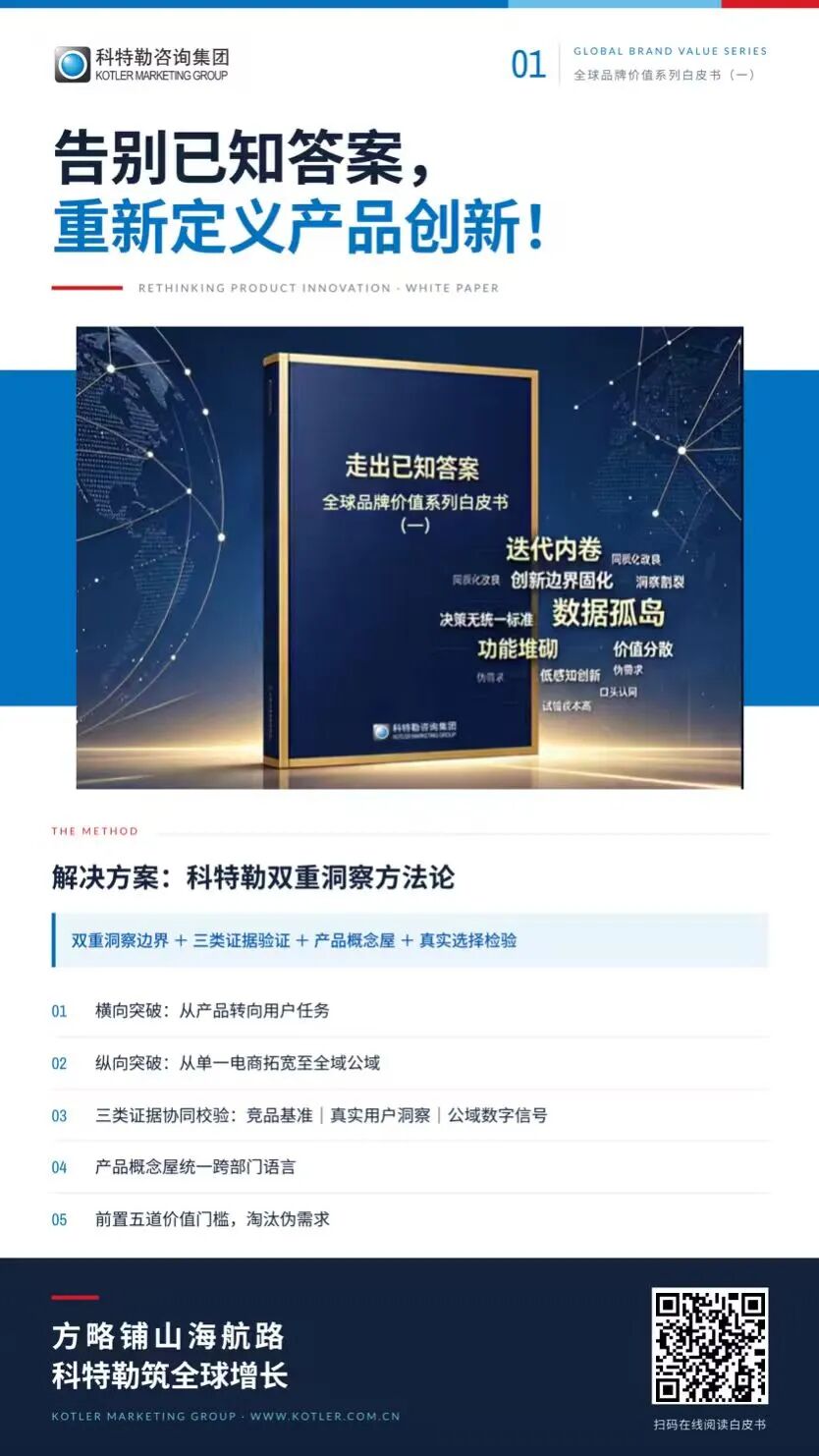
Kotler officially launches the Global
Brand Value Series White Paper (Issue 1)!
Gain insights into the forefront and seize
opportunities.
Scan the QR code on the poster at the end of the article now to
receive the full report for free.
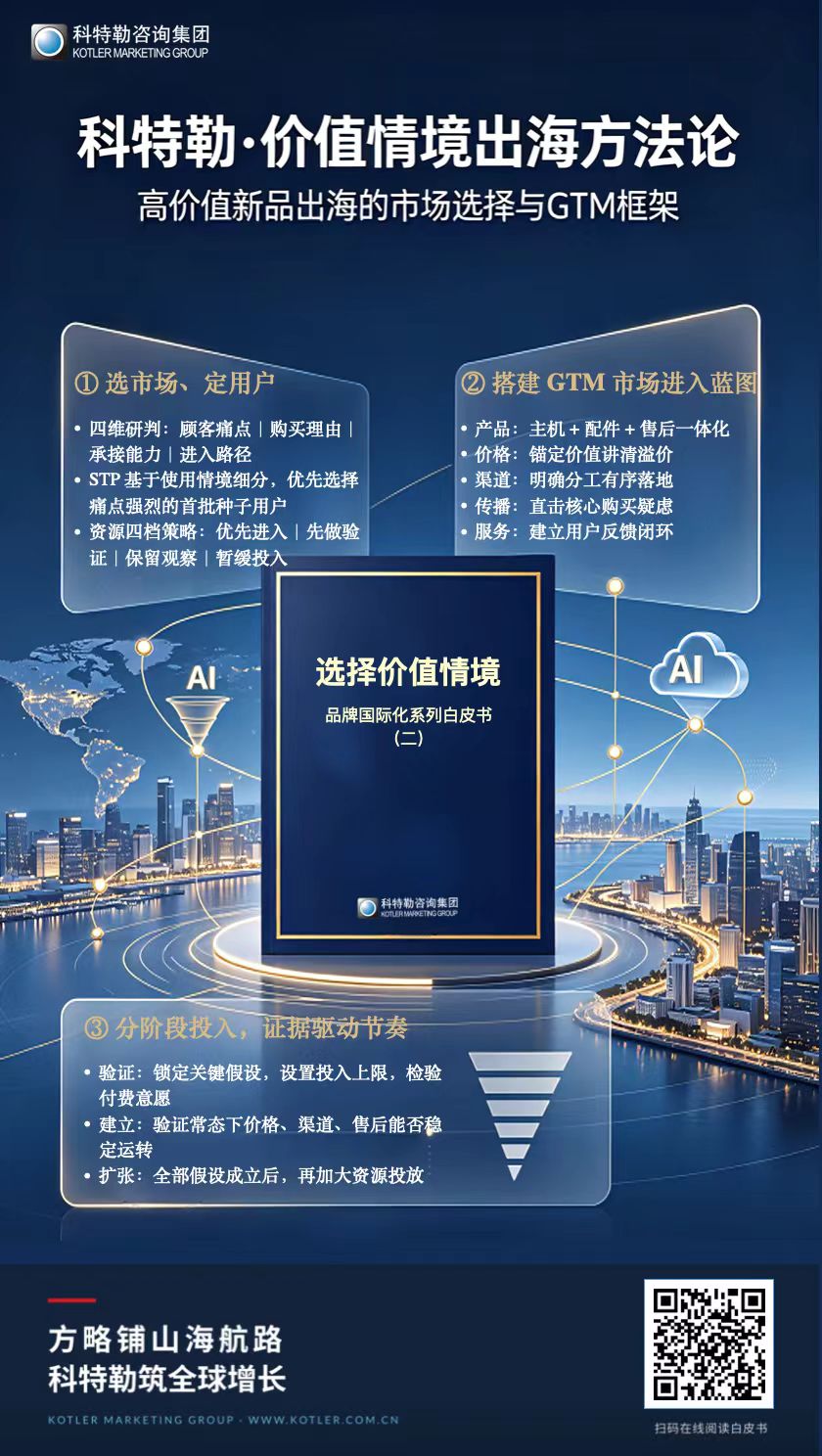
Kotler officially launches the Global Brand Value Series White Paper (Issue 2)!
01
Global Brand Competition Is Moving from Product
Exporting to Continuous Value Creation
Chinese companies must not only export more products; they must also continuously create new value in global markets.
Over the past two decades, Chinese companies have entered global markets primarily on the strength of an extraordinarily competitive efficiency system.
This system is about far more than simply
“lower costs". It includes a comprehensive industrial ecosystem, rapid
engineering response, stable large-scale manufacturing and efficient
supply-chain coordination, as well as the capabilities in platform operations,
digital advertising and rapid product iteration that emerged later. It is
precisely these capabilities that have enabled large numbers of Chinese
companies to sell their products around the world at a speed that would once
have been difficult to imagine.
The latest data continue to demonstrate the strength of this system. In 2025, China’s exports of goods reached RMB 26.989 trillion, of which exports of mechanical and electrical products totalled RMB 16.4683 trillion, representing approximately 61.0% of all goods exports. Behind these figures lies an industrial system capable of manufacturing complex products at scale and delivering them reliably to global markets.
However, being able to make products and sell them around the world does not mean that a global brand has already been built. Export statistics record where goods originate, but they cannot tell us whose name consumers remember; they record the scale of trade, but they cannot tell us whether companies have obtained profits and pricing premiums commensurate with their innovation.
An even more noteworthy change is taking place in R&D. Between 2012 and 2025, China’s R&D expenditure as a percentage of GDP increased from 1.98% to 2.80%. In 2025, national R&D expenditure reached RMB 3.9262 trillion, an increase of 8.1% from the previous year. This means Chinese companies are gaining a stronger investment base from which they can move beyond: “making mature products better, faster, and cheaper", toward: “using technology and product innovation to solve new user problems."
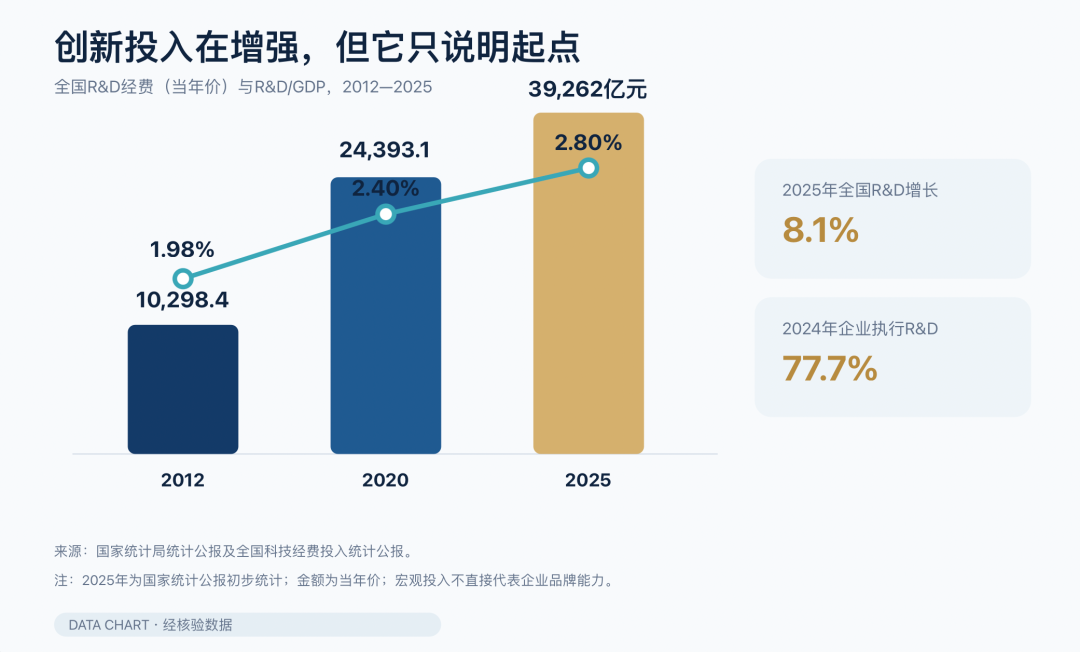
Figure 1 — China’s innovation investment continues to strengthen, but investment is only the starting point for continuous value creation
Global value-chain data provide another perspective. The OECD estimates that in 2022:
- domestic value added accounted for approximately 83% of Chinese exports;
- services value added accounted for 29.1% of Chinese manufactured exports.
The first figure reflects the contribution of China’s domestic industrial and supply systems to exports. The second reminds us that when a manufactured product reaches the market, it also incorporates substantial service activities—including wholesale and retail, transportation, finance, and information services.
Together, these figures show that Chinese companies already possess powerful manufacturing, supply-chain, and R&D foundations. But they do not answer a more specific question: How does the differentiation created by the R&D department become value that overseas consumers genuinely perceive? Domestic value added is not the same as corporate profit. Services value added cannot all be classified as branding and marketing. The stronger manufacturing capabilities become, the more important this unresolved issue becomes.
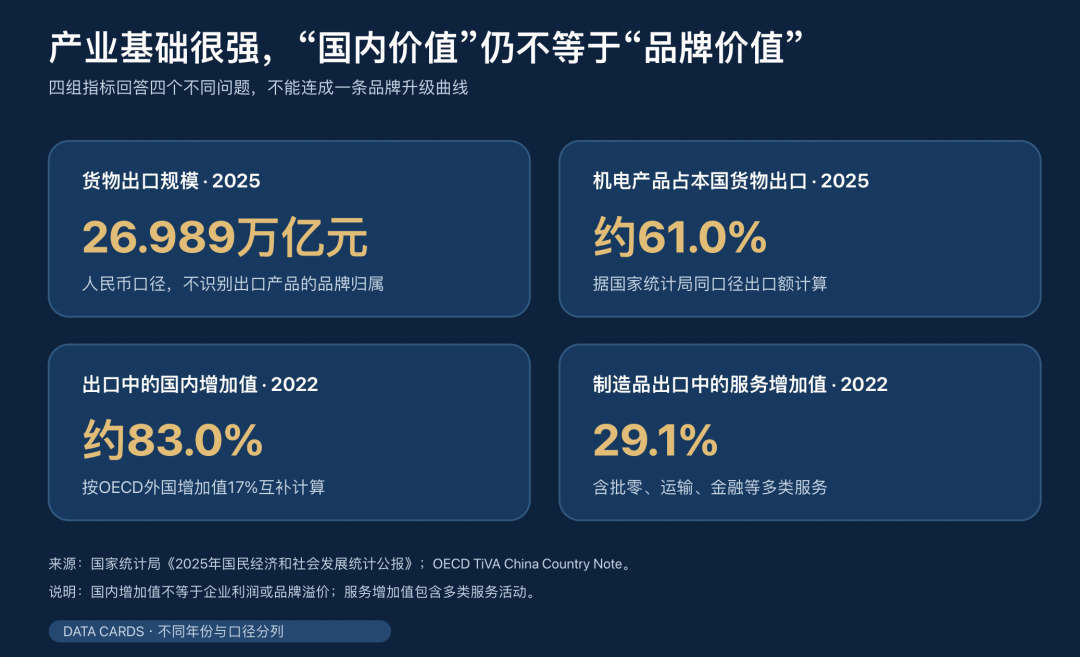
Figure 2 — The industrial foundation has been established, but brand value must still be actively created by companies
In the past, when product differentiation was primarily expressed through price, specifications, and delivery efficiency, platform search, product comparison, user reviews, and performance advertising could efficiently accomplish much of the sales task. Consumers already knew what they wanted to buy. They merely needed to choose among similar products. The efficiency system built by Chinese companies was ideally suited to succeeding under these rules.
High-value innovative products face a different market challenge. Consumers may never have encountered this type of product before. They may not understand why a new feature is worth paying for. They need to know:
- what situations the product is suitable for;
- how it differs from existing solutions;
- whether actual experience lives up to the promise;
- how high the learning and switching costs are;
- and who will take responsibility if something goes wrong.
Competition therefore shifts from: “Who can make the product?" toward: “Who can continuously create value around real needs and enable the market to understand and believe in that value?" Every increment of differentiation created by R&D must pass through demand assessment, market selection, channel design, content explanation, trust building, and performance measurement before it has a chance of becoming a consumer choice.
Thus, moving from efficiency-led globalization to value-creation-led internationalization does not mean abandoning Chinese companies’ existing advantages in manufacturing, supply chains, and platforms. Quite the opposite. It means building on those advantages and converting: “making a better product", into: “creating a better solution for different markets."
Alex Edmans uses the idea of “Grow the Pie" to explain that corporate purpose and profit do not have to be a zero-sum trade-off. Great companies do not merely compete for existing value. They can create new total value through innovation, capabilities, and long-term investment. For Chinese companies, this means globalization should not merely be about Grow the Slice—taking a larger share of an existing market. More importantly, companies should enlarge the pie by addressing new user problems, new use cases, and new forms of cooperation.
Efficiency determines whether a company can reliably manufacture an innovative product and deliver it globally. Value conversion determines whether overseas consumers can see it, understand it, believe in it, and ultimately pay for it. Continuous value creation goes one step further: it determines whether the company can bring long-term new value to consumers, partners, and local markets. Only when these three elements are connected can a Chinese company evolve from a global product supplier into a global value contributor.
And this capability upgrade will first appear in the place Chinese companies know best—and where path dependence is most likely to occur: Amazon.
02
Amazon
Is an Important Starting Point, but It Cannot Carry the Entire Burden of Value
Communication
High-value products may complete transactions on platforms, but companies cannot place the entire burden of communicating value on the transaction platform.
This section uses Amazon not because it is
an obligatory starting point for every company, but because it captures many of
the platform-operating practices most familiar to Chinese B2C product
companies—and clearly illustrates what a platform can perform efficiently, as
well as what it cannot independently accomplish.
For many consumer technology, appliance,
and home-product companies, Amazon is an important first stop on the road to
global markets. There is sound business logic behind this choice.
Companies can rapidly enter a market where demand already exists, completing product listing, search, comparison, payment, fulfilment, and after-sales service within the same system. Prime membership, user reviews, platform rules, and transaction guarantees can also reduce consumers’ concerns when purchasing from an unfamiliar brand for the first time.
For highly standardised products whose differences are easy to compare, platforms remain an extremely efficient global sales infrastructure.
Amazon today is also far more than a row of online shelves. In addition to on-platform advertising, display advertising, and video advertising, it has developed tools for brand-attitude research, off-platform marketing attribution, and cross-touchpoint data analysis. In 2025, Amazon reported:
- US$172.162 billion in third-party seller services revenue;
- US$68.635 billion in advertising services revenue.
From seller services to advertising and measurement, Amazon now simultaneously performs transaction, fulfilment, media, and data functions.
The problem is not that platforms lack tools. The problem arises when companies interpret: “the platform provides the tools" as meaning: “consumers already understand the value."
A product page can contain video, specifications, Q&A, and reviews. Advertising reports can record impressions, clicks, and sales. But questions such as:
- Why does a new technology matter?
- Is an unfamiliar brand trustworthy?
- Is the consumer willing to change an established habit?
still need to be answered across a much broader decision journey.
This issue is especially acute for high-value innovative products. The newer the differentiation, the more explanation it requires. The greater the promise, the more evidence it requires.
The higher the price, the more actively consumers will seek a second or third source of information. Professional reviews, search content, social discussion, community word-of-mouth, offline experiences, recommendations from friends, and long-term brand content may all influence judgment before the final transaction takes place.
A consumer ultimately returning to Amazon to make the purchase does not mean that all prior understanding of value occurred on Amazon. For many consumers, familiar platform payment, fulfilment, returns, and after-sales guarantees are simply the best way to reduce transaction risk. The platform may therefore remain the most important transaction point at the final purchasing stage. The real mistake occurs when companies see that the last click happened on the platform and therefore credit the platform with all the awareness, understanding, validation, and trust that preceded it.
Anker Innovations’ channel structure demonstrates that expanding capabilities does not conflict with retaining a platform. In 2024:
- Amazon accounted for 54.30% of Anker Innovations’ total revenue and remained its largest single channel;
- its own independent website accounted for 10.13%;
- offline channels accounted for 28.77%;
- other third-party platforms accounted for 6.79%.
The company’s R&D expenditure that year reached RMB 2.108 billion.
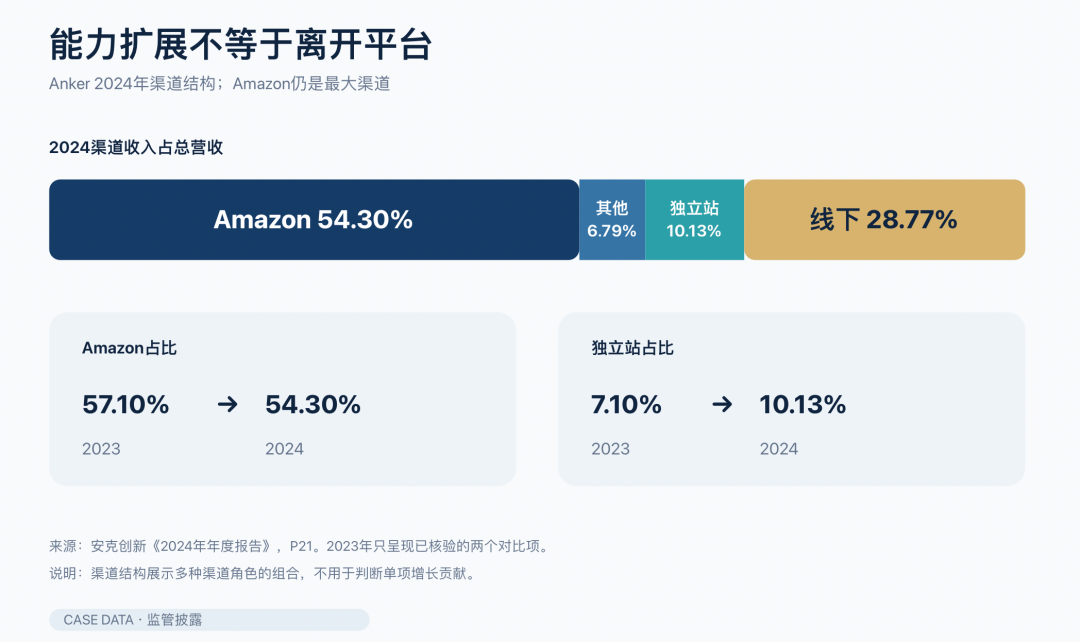
Figure 3 — Expanding capabilities does not mean leaving the platform
The most valuable aspect of these figures is not that they allocate growth credit to a particular channel, but that they present a clear structure: Amazon continues to perform an important transaction role, while the company simultaneously develops more ways of engaging with markets, serving consumers and obtaining feedback. Capability expansion is not “de-platforming"; rather, it prevents the company from placing its entire global growth capability on a single platform.
This is also the real meaning of omnichannel marketing for high-value products. Omnichannel does not mean simply buying another batch of off-platform traffic after leaving Amazon, nor does it mean opening an account on every social platform. Search, social media, communities, transaction platforms, specialist retail, offline experiences and a brand’s proprietary user ecosystem each have different usage contexts, sources of trust and data boundaries. A company’s task is to allow each touchpoint to perform a clear role: where users first discover value, where differentiation is explained, where credible evidence is provided, where transactions are completed, where relationships are retained, and where feedback is returned to the product team.
The
measurement system must also serve this division of responsibilities. Amazon
Attribution can connect some off-platform marketing activity with shopping
behaviour on Amazon; Brand Lift is used to observe differences in brand
attitudes before and after advertising exposure; Amazon Marketing Cloud (AMC)
can analyse certain aggregated signals that can be connected. In 2025, Amazon
also opened AMC to all advertisers running Sponsored Ads on the platform. The
coverage of these tools is expanding, but different tools still answer
different questions.
Whether a company uses ROAS, marketing ROI or another measure, the underlying problem is the same: when interpreting “return", companies often look only at the most easily quantifiable outcome and the one closest to the transaction—sales revenue. Whether brand awareness has increased, whether product-related leads or signals have increased, whether user relationships have accumulated and whether channel-partner capabilities have strengthened are also outcomes that marketing needs to create and measure, yet they can easily disappear from operating evaluations. They require their own indicators, research and managerial judgment.
Even when only sales return is considered, attributed sales merely indicate that a set of rules connected a particular action with an order; they do not answer whether that order would still have occurred without the investment. The incremental effect of marketing still requires experiments, models and managerial judgment to identify.
Therefore, moving from a platform toward omnichannel operations does not begin with an increase in the number of media channels, but with a change in the company’s growth logic. Management needs to move from “where can we still buy cheap traffic?" toward “what problem does the consumer need solved at each stage?" For high-value innovative products, this step is especially important: no matter how good the product is, if the company lacks the ability to explain value and build trust both inside and outside the platform, it will struggle to escape competition over specifications and price.
03
Innovative
Products Going Global Most Commonly Break Down in Five Places
Continuous value creation is not merely a mission statement; companies must bridge disconnects in demand, market selection, delivery, translation and management.
Across many corporate projects, we repeatedly observe a similar launch scenario. The following is not a description of any single company, but a synthesis of common problems.
A company is preparing to launch a major new product. The product team has completed competitor specification benchmarking, analysed platform reviews and made significant improvements through new structures, algorithms or materials. The overseas business team tends to prefer entering the country where the company already has the strongest business foundation. This decision has a basis in channels, teams and confidence. When the launch stage arrives, the product, brand, e-commerce, sales and finance teams each begin their work: the product team emphasises functional leadership, the brand team looks for a communication theme, the e-commerce team focuses on page conversion, the sales team presses for channel materials, and finance requires the budget to generate a return.
Every department is busy, yet the product’s value becomes progressively thinner as it is handed from one team to another. User insights fail to enter market selection in their entirety, product concepts do not become communication structures, off-platform content and platform transactions operate separately, and the final review still revolves around sales and ROAS that can be directly recorded. A few months later, management often sees the same conclusion: the product is good, the communication did not get through, the brand did not take off, and attribution remains unclear.
The problem is not that one particular marketing action was poorly executed, but that five connections between product innovation and global-market value have been broken: demand, market, delivery, translation and management.
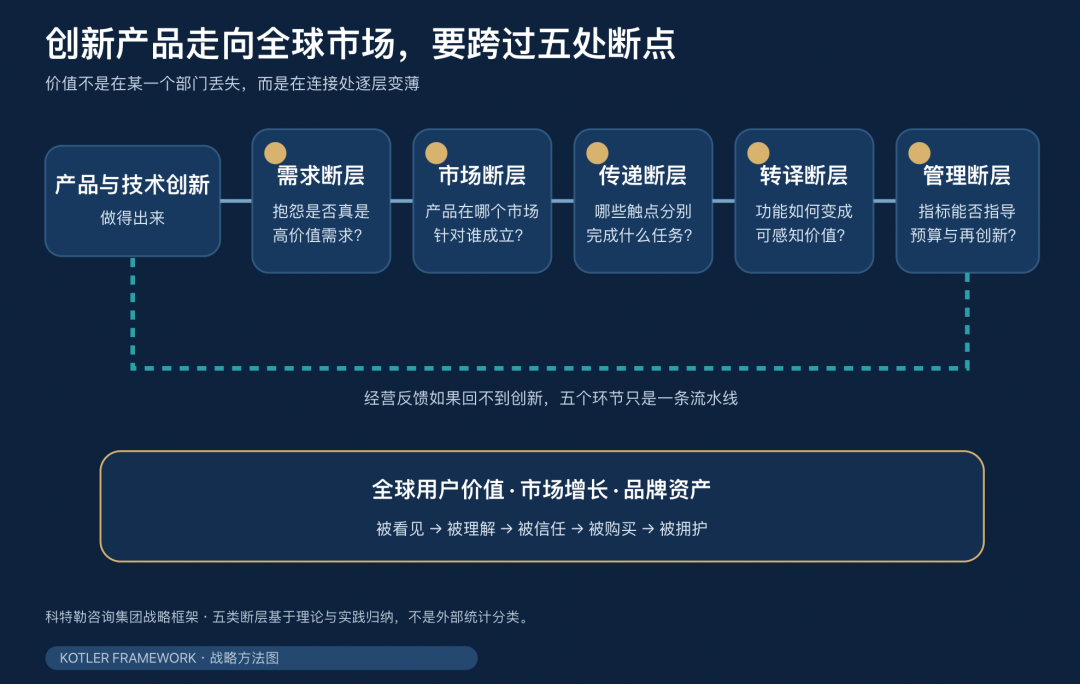
Figure 4 Innovative products must cross five disconnects on their way to global markets
01
Demand Disconnect: The Company Sees Complaints but Has Not Identified a Need Worth Paying For
Competitor analysis and Amazon reviews are of course important. They can tell companies what competitors are doing, what users dislike about existing products and which specifications have already become basic competitive requirements.
But this information is inherently organised around products that already exist. The more companies depend on competitive benchmarking, the more product development tends to become specification chasing; the more they rely on frequently appearing review complaints, the easier it becomes to confuse “many people are complaining about this" with “users are willing to pay a higher price to have it solved". Complaint frequency, problem importance and willingness to pay are not the same thing.
Truly high-value needs are often hidden within much more specific life situations: how are users currently making do with this problem? Why do they rarely use a feature even after purchasing it? Are the purchaser, the user and the influencer the same person? Which inconvenience, risk or psychological burden are users willing to pay more to reduce?
AI can help teams search, cluster and analyse larger volumes of online information, and can accelerate hypothesis generation. But it still needs to be combined with online behavioural research, in-depth interviews, observation of real usage and offline contextual research. The purpose is not to collect more “need points", but to identify an opportunity that is sufficiently important, sufficiently specific and sufficiently valuable to justify building a high-value product around it.
The final result of this stage should be a clear product definition: first define product positioning; then establish one to three functional, experiential or emotional value propositions; next use core features to support those propositions; finally confirm the software and hardware features, design and specification requirements on which the product cannot afford to lose against competitors. This serves product development and answers the question: “What value are we actually trying to create?"
02
Market Disconnect: The Company Knows Where It Wants to Go but Has Not Verified Whether the Product Works There
In reality, market selection rarely begins with a global ranking table. Many companies already have customers, teams, channels and operating experience in North America and therefore decide to launch a new product there first. Such path dependence is not inherently wrong. It can reduce organisational uncertainty and is consistent with the logic of resource reuse and management confidence.
The problem arises when a company turns “we have reasons to enter this market first" into “this market no longer needs to be validated". The same innovation can face different category perceptions, price anchors, competitive structures, channel structures and usage habits in different countries. Companies still need to answer: for which group of people does the product first create value? How do local consumers understand this category? Which functions constitute genuine differentiation, and which are merely basic entry requirements?
Classic market segmentation, target-market selection, positioning and the marketing mix remain effective here, but they cannot simply be applied mechanically. Product strategy needs to clarify positioning, feature combinations and value priorities for the target market; pricing must explain the relationship among price, value, competition and channels; channel strategy must decide which sales channels to enter and whether each is responsible for coverage, endorsement, experience or transaction, and whether the company should enter first through crowdfunding, specialist retail, platforms, distributors or its own channels; communication must first clarify the awareness tasks that need to be solved during market entry, while detailed content and cross-channel coordination can be developed later.
The result of this stage should be a market-entry blueprint that genuinely constrains resource allocation. It does not answer “can we sell in this country?", but rather “for whom does this product work, why does it work, and in what sequence should we enter the market?"
03
Delivery Disconnect: Consumers Transact on the Platform, So Companies Assume Value Was Also Delivered There
The delivery challenge for high-value innovative products is first and foremost a question of context. Amazon is good at capturing category demand that has already formed. Consumers enter the platform with relatively clear purchase intent, search, compare, read reviews and complete transactions. But when an innovation creates a new use case, requires users to change their habits or requires a higher price to support meaningful differentiation, many potential users have not yet connected their own problem with the category, and will not necessarily go directly to the platform to search for an answer.
If a company organises all of its marketing around platform search terms, product pages and on-platform advertising, it will mainly reach consumers who have already entered the category and are currently searching and comparing. The more market education an innovative product requires, the more easily it gets pulled back into competition over specifications, reviews, price and rankings. Innovative products can transact on platforms, but platforms alone struggle to complete the entire process from discovering the problem, understanding the innovation and validating the promise through to developing brand preference.
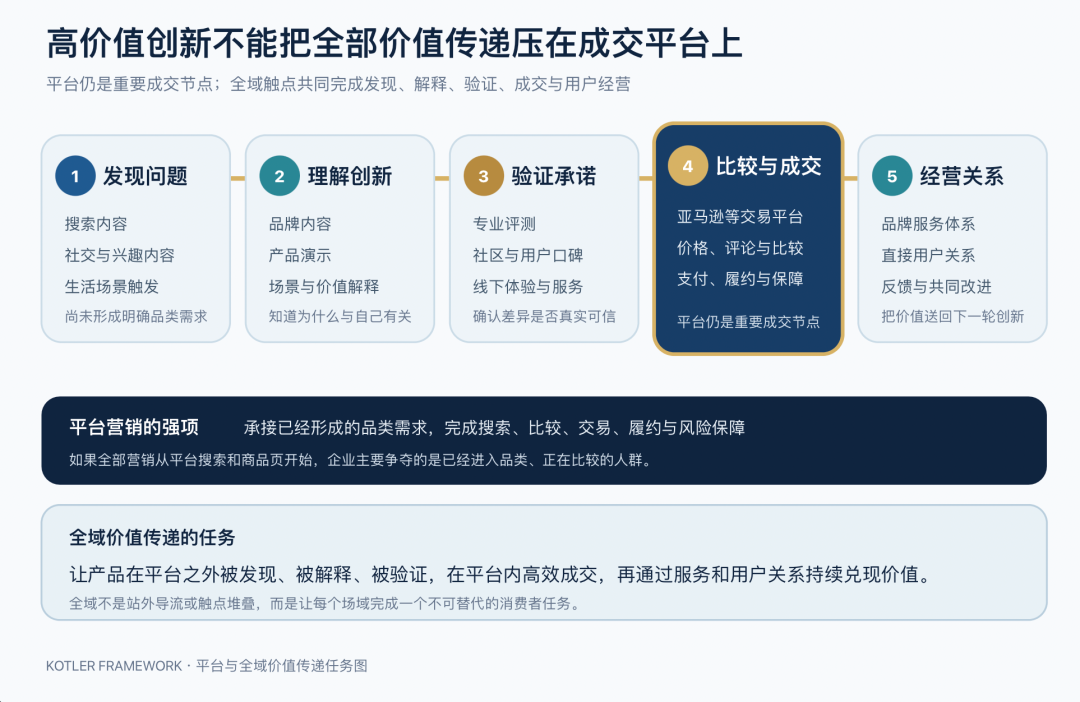
Figure 5 High-value innovation cannot place the entire burden of value delivery on the transaction platform
High-value innovative products therefore need to move from platform marketing toward omnichannel value delivery. Search helps users connect their problems with new solutions; social media and communities bring usage scenarios into authentic discussion; brand content and product demonstrations explain the differences created by innovation; professional reviews, user word-of-mouth and offline experiences provide independent validation; platforms such as Amazon continue to perform comparison, transaction, fulfilment and risk-assurance roles; and the brand’s proprietary service and user systems are responsible for identifying users, retaining and managing relationships, and returning feedback to the product team.
Research into high-involvement or high-perceived-risk products such as automobiles, personal computers and consumer electronics also shows that some consumers broaden their information search, use multiple sources and combine different channels before and after purchase. Signals such as brand credibility, professional reviews, user reviews and online guarantees may all help consumers form judgments or reduce uncertainty.
Omnichannel does not mean redirecting off-platform traffic back to the platform, nor does it mean building every touchpoint. What it needs to solve is task coordination: allowing the product to be discovered, explained, validated and smoothly purchased, and then continuing to deliver value through service and direct user relationships. For high-value innovative products, what is truly necessary is not an increase in the number of channels, but the use of a small number—or several—key touchpoints to cover the complete decision process and develop cross-touchpoint coordination. The specific combination depends on the category, market and level of user risk.
04
Translation Disconnect: The Product Has Already Been Clearly Defined, but the Launch Starts Again from a Feature List
Many projects do not lack insight. The real
problem appears during the handover before launch.
During development, the product team has already answered what value the product is intended to create and for whom. During launch, the communication team must go one step further and answer: how should consumers understand this value? The two tasks are closely connected, but they perform different functions; the former defines the product, while the latter organises how it is expressed in the market.
An effective market expression should begin from product positioning, explain both the functional value and emotional value obtained by the user, and then support these claims with specific features and credible evidence. Features answer what the product does, value answers what the user gains as a result, and evidence answers why the user should believe it. Communication must also place abstract value back into concrete usage scenarios, so that product differentiation, usage results and the justification for paying can all be seen by consumers at the same time.
Yet what often happens in practice is that the advertising agency receives a feature list, the e-commerce team receives specifications and selling points, the retail team uses another set of messages, and brand content pursues a broad theme that has little connection with the product evidence. The user insights, product positioning and market choices developed over the preceding months are not actually used when the product is launched.
As a result, product marketing, brand marketing, cross-channel communication and DTC each begin “re-creating" the story. There are more messages, but the value becomes increasingly fragmented. This is precisely why the third and fourth stages must connect: the preceding stage determines where consumers understand and believe, while the following stage must organise the same value into executable content and market activity.
05
Management Disconnect: Every Department Has Data, but Management Still Does Not Know Where to Invest the Next Dollar
E-commerce, brand, social media, retail and finance each possess a portion of the truth. The platform knows what happened inside the platform, the independent website knows a portion of identifiable visits and transactions, social platforms know impressions and interactions, retail channels know shipments and some sell-through, and finance records final revenue.
The problem is that these data are produced according to different rules and answer different questions. Putting all of them onto a single dashboard does not automatically produce a complete operating answer.
Management needs to distinguish at least three things. First, how current-period revenue and costs are recorded and allocated. Second, what functional value is created respectively by branding, content, channels and user operations. Third, what would have happened if a particular investment had not been made.
The first two can gradually be improved through verifiable transaction, cost and user-behaviour data, together with clearer attribution rules and relationships among indicators. The third asks “what would have happened without this investment?", and requires experiments, models and managerial judgment. The value of marketing attribution is therefore shifting from “allocating credit for historical orders" toward “helping companies make decisions for the next period".
Only by reconnecting all five disconnects can a company build a value-management system extending from demand discovery to operating learning. Each stage must genuinely inform the next stage, and market outcomes must also feed back into the next round of product innovation. Value conversion is an important task within this process, but it is not the whole story: companies must also continuously discover new value opportunities, fulfil promises across different markets, and improve solutions jointly with consumers and partners. Otherwise, every department may successfully complete its own task while the value of the product as a whole is still lost within the organisation.
04
A
New Global Brand Is, First and Foremost, a Capability for Continuous Value
Creation
A new global brand is the ability of a company to continuously create, deliver and co-create value across different markets.
If we look only at outcomes, a global brand can easily be reduced to several indicators: higher overseas revenue, presence in more countries, greater awareness and larger advertising budgets.
These outcomes are of course important, but they do not explain how a company can continuously generate them. A company may have sales in many countries while its brand remains heavily dependent on platform search and channel recommendations; it may also generate enormous attention during a new-product launch without developing stable capabilities in product innovation, user management and market learning.
We prefer
to define a “new global brand company" from the perspective of capabilities:
A new global brand company is one that can understand the real needs of different markets, continuously create and fulfil user value, work with local consumers, partners and society to expand total value, and reinvest trust, feedback and operating results into the next round of innovation.
This definition does not require every company to replicate the same path. It places the brand back within business operations: a brand is both the consumer’s perception of a company’s long-term promise and the company’s capability to continuously create, communicate and fulfil value. A brand is not an additional layer of communication packaging added after value creation, but a long-term trust asset accumulated through repeated fulfilment of promises.
This is also where Kotler’s marketing thought provides a strategic anchor. In reviewing the evolution of marketing, Philip Kotler has emphasised that value creation is the central concept of marketing, and that brands add value for customers through trust; the American Marketing Association’s definition of marketing likewise extends the recipients of value to customers, clients, partners and society as a whole. This means that the internationalisation of a brand cannot simply calculate how much a company obtains from overseas markets, but must also answer what the company creates for these stakeholders.
Institutional economists Daron Acemoglu, Simon Johnson and James A. Robinson have long studied how institutions shape the prosperity of countries and societies. Their analysis of inclusive and extractive institutions also provides a broader lens for global companies: advantages built purely on information asymmetries, differences in rules or short-term access to resources are difficult to convert into long-term trust.
Global value-chain research provides the theoretical background for this understanding. The OECD and the World Bank have pointed out that higher-value creation often takes place both upstream, in new concepts, design, R&D and key components, and downstream, in marketing, branding and customer service. Other OECD research estimates that in the manufacturing companies of some countries, support functions such as R&D, engineering, logistics, distribution, marketing, sales, after-sales service, information technology and management account for a substantial proportion of employment and value activity.
This does not allow us to calculate a particular Chinese company’s “brand contribution rate". What it shows is that the global competitiveness of manufacturing companies has never existed solely within the factory. Products, channels, brands, services and user relationships are continuations of manufacturing value as it enters the market.
If continuous value creation answers “why can the brand endure over time?", then channels, touchpoints and user relationships answer “how does this capability actually operate in the market?" They are not the entirety of the brand, but they perform the concrete tasks through which value is discovered, understood, experienced, fulfilled and fed back. Seen from this perspective, DTC and omnichannel operations are no longer about assuming that the more channels one has, the more advanced one is; rather, the question is whether different operating interfaces can jointly support a long-term promise.
The path taken by On provides an illustration of channel roles. In 2024, On recorded net sales of CHF 2.3183 billion, of which wholesale channels accounted for 59.3% and direct-to-consumer channels (DTC) accounted for 40.7%. The company entered markets and expanded coverage through selected specialist retailers, while DTC included both e-commerce and directly operated stores and was used to engage consumers directly, obtain feedback and manage the customer experience. By 2024, its products were available in approximately 10,500 retail stores.
These figures do not prove that a particular channel structure will inevitably generate growth. What they demonstrate is that specialist retailers can provide category endorsement, product trial and market coverage, while DTC can perform more direct roles in content, service, experience and feedback. The two are not an “advanced" versus “outdated" relationship, but rather a combination of different market tasks.
DTC therefore cannot simply be understood as an independent website, nor can it be treated as a synonym for brand capability. It is closer to a direct-relationship capability: whether a company can directly reach, identify and serve consumers at some touchpoints, and continuously learn from content, communities, services and real-world usage feedback. Transactions may take place on the official website, in directly operated stores, on platforms or through partner retailers; the key issue is not whether all transactions return to proprietary channels, but whether the company has built an understanding of the market that does not depend entirely on third-party interpretation.
If a company treats its independent website merely as another transaction platform and compares its traffic-acquisition cost directly with Amazon, it can easily reach the conclusion that “we may as well go back to the platform". That conclusion may be correct in terms of single-transaction acquisition cost, but it ignores the role of DTC in user identification, ongoing service and operating learning.
Chinese companies are also expanding similar capability combinations. In 2024, Roborock invested RMB 971 million in R&D, equivalent to 8.13% of revenue; overseas core-business revenue reached RMB 6.388 billion; advertising and market-promotion expenses reached RMB 1.924 billion; and during the same period its products entered approximately 1,398 Target stores and approximately 900 Best Buy stores.
Roborock’s path demonstrates that when high-value products seek to reach broader groups of consumers, engineering capability is only the starting point. R&D investment needs to advance together with market explanation, retail reach and local operations before product value has the opportunity to be understood, experienced and chosen by more consumers.
Vesync provides another perspective. In 2024, the proportion of revenue from non-Amazon channels increased from 22.0% to 25.5%, the VeSync App had approximately 9.6 million registered users, and the company had presence in more than 2,500 mainstream retail stores in the Asia-Pacific region. These figures respectively record channel structure, account and device connectivity, and retail coverage; the annual report does not disclose how many of the registered users remain active, make repeat purchases or continue receiving services.
Approximately 9.6 million registered users therefore first represent a foundation of account and device connections. Viewed together with non-Amazon channels and retail coverage, however, they show not only the direction of capability building but also a potentially enormous user-value resource: the company can use this foundation to understand actual usage, continuously serve users and identify opportunities for the next generation of products and growth.
From these paths, we can see that a new global brand company does not prove its maturity by “leaving the platform", nor does it prove that it possesses DTC capability simply by owning an independent website. Instead, it designs three things separately and then connects them: sales channels determine how the product enters the market and completes transactions; value-delivery touchpoints determine how users understand and believe the value; DTC determines how the company continuously identifies, serves and learns from users.
When these three are connected, the brand is no longer merely an image maintained by the communications department, but becomes an asset jointly accumulated through product innovation, market entry, value fulfilment, user operations and reinvestment.
The “global sustainable value management system" provides the strategic umbrella, while the five-stage overseas-launch framework constitutes the most mature and practically established core methodology currently available. It focuses on how high-value innovative products complete value creation, selection, delivery, fulfilment and operating learning in global markets. Allowing user feedback to enter the next round of innovation is the starting point of co-creation; expanding total value together with partners and local societies represents the direction in which corporate capabilities can continue to evolve.
05
Turn
a Single New-Product Launch into a Sustainable Global Value Management
Capability
The five stages connect critical decisions and identify value disconnects, but they do not replace a company’s own governance design.
Chinese companies do not need to choose one “correct answer" among products, platforms, brands and traffic. These capabilities exist at different levels. What truly determines whether high-value innovation can become global is whether a company can connect a series of decisions.
This global value-management system can be summarised into five continuous stages. It is an operating framework designed to help management connect key decisions and identify value disconnects; it is not a complete governance SOP that prescribes organisational structures, job responsibilities, approval thresholds and collaboration processes in advance. Who should be responsible, when decisions should be made and which indicators should serve as thresholds still need to be designed according to the company’s stage of development, category characteristics and market conditions.
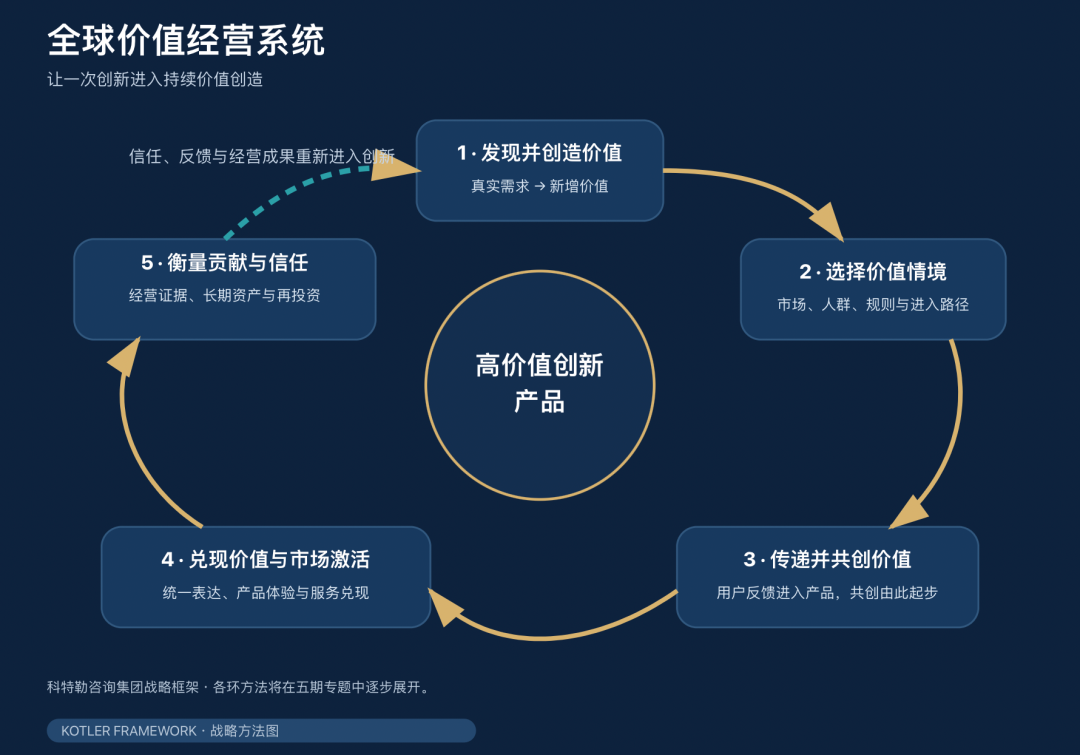
Figure 6 The global value-management system turns a single innovation into continuous value creation
Stage 1 Discover and Create Value
Companies begin with competitor analysis and platform reviews, while adding AI-supported online-information analysis as well as interviews, observations and research into real usage contexts. The goal is not to obtain a longer list of needs, but to determine which unmet need is sufficiently important, offers sufficient room for differentiation and can provide a clear reason to pay.
The output of this stage is a product definition capable of guiding development. It determines “what new value should this product actually create?" If the starting point remains nothing more than competitive benchmarking, even the most sophisticated marketing later on can only make a similar product communicate more loudly.
Stage 2 Select the Value Context
Once the product concept enters a specific country, it needs to undergo market validation again. Existing business, teams and channel foundations can provide a starting point, but they cannot become a free pass that exempts the market from validation. Decisions concerning target users, competitive structure, product positioning, pricing logic, sales-channel roles and order of entry must constrain one another; local usage habits, service requirements, partnership rules and social expectations also determine whether the company can fulfil value over the long term.
The output of this stage is a market-entry blueprint. It determines “in which market, and for whom, does this value work?", and also establishes the boundaries for subsequent value delivery and product launch.
Stage 3 Deliver and Co-create Value — First Let Feedback Enter the Product
Companies should organise the roles of search, social media, communities, platforms, retail and proprietary user touchpoints around the consumer’s actual decision process, from awareness and interest to active validation, purchase, sharing and recommendation. The specific combination of touchpoints must serve the product, market and user problem rather than mechanically copying a channel checklist.
This stage determines “where is value discovered, understood, validated, purchased and jointly improved?" Amazon may still be the most important transaction point at the final purchasing stage. What the omnichannel system needs to do is allow earlier awareness, consideration and validation to connect smoothly to the transaction, while also allowing community feedback, service interactions and real usage experience to enter the next round of product and experience optimisation. The “co-creation" referred to here first means allowing user feedback to genuinely change the product and experience; broader co-creation with partners and local societies represents a further direction for the evolution of corporate capabilities.
Stage 4 Discover and Create Value
At the specific launch stage, companies need to convert product definitions, target markets and touchpoint roles into a unified expression of value, a launch theme, a content system and an execution plan.
Product marketing is responsible for translating innovation into value that users can perceive; brand marketing uses major products to express the brand’s long-term promise; integrated marketing communications coordinate paid media, brand-owned touchpoints and external word-of-mouth; DTC is responsible for reaching, identifying, retaining and continuously serving consumers. At the same time, product experience, delivery, after-sales service, privacy and local service must genuinely fulfil what communications have promised. These four cannot operate as four independent plans, nor can they be separated from the delivery experience; they need to use the same insights, positioning, value propositions and credible evidence.
This stage determines “how is value
organised into messages, content and market activity?" It must remain traceable
to the previous three stages, preventing the launch team from receiving a
feature list and starting all over again.
Stage 5 Measure Contribution, Accumulate Trust and Drive Reinvestment
The purpose of marketing attribution is not merely to settle accounts for the past. Companies need both to calculate current-period historical contributions and determine how the next period’s budget should be allocated, while gradually working out the relationship among macro-level business objectives, mid-level operating indicators and micro-level marketing actions.
Transactions, costs and user behaviour that can be directly verified can be managed through reliable data and clear attribution rules; cross-touchpoint, cross-period and brand effects require experiments, models and managerial judgment. Financial revenue recording answers “how was the business recognised and allocated?", functional-value evaluation answers “what value did different activities create?", and incrementality analysis answers “what would have happened without this investment?" The three need to be connected, but they cannot be conflated.
The fifth stage is also not the end. After a new-product launch, search terms, review themes, reasons for returns, customer-service issues, usage data, retail feedback, brand indicators and experimental results should return to Stage 1 and update the company’s assessment of needs, its product roadmap and its next market selection. Companies first need to identify which value was converted only into short-term sales and which value accumulated into user trust and long-term operating capability; where conditions permit, they can also continue observing how partner capabilities, local services and social contributions are being built and validated.
If operating feedback does not return to innovation, the five stages are merely a production line; only when market outcomes genuinely influence the next round of decisions does the system become a closed loop.
The most important significance of this framework is to help management recognise that the globalization of high-value products is not merely a piece of work handed over to the marketing department shortly before launch, but an enterprise operating system extending from value creation to value fulfilment and then to operating learning.
Five subsequent specialist white papers will explore the methods, tools, cases and implementation boundaries of each of these five stages.
06
Where Should Companies Begin?
Start with one high-value innovative product and identify the disconnect that most severely obstructs continuous value creation.
Very few companies need to rebuild all five stages at the same time. A more realistic approach is to take one high-value innovative product currently under development or approaching launch and identify the disconnect that most seriously obstructs continuous value creation.
Management can begin by seriously discussing five questions.
First, where did the product concept actually come from?
Was it primarily derived from competitor specifications and platform reviews, or has the company already used AI and online-information analysis, interviews, observation and real-context research to confirm what value overseas users are actually willing to pay for? Can the product team clearly explain product positioning, value propositions, core functionality and the competitive fundamentals on which the product cannot afford to lose?
Second, why enter this market first?
An existing customer base, channels and teams can be sufficient reasons, but has the company also examined target users, price bands, competitive structures and channel conditions? Do product positioning, features and value priorities require market adaptation? What new value does the company intend to create for local users and partners, and which service rules and social expectations must it comply with and adapt to?
Third, where will the value be understood and believed?
If the final transaction takes place on Amazon, where did the user first see the product before that, where did the user understand the new feature, where did the user validate its performance, and where did the user confirm the risks surrounding after-sales service? Do search, social media, communities, platforms, offline touchpoints and proprietary channels each have clearly defined roles? Is the company simply sending selling points one-way, or has it already established mechanisms allowing users, communities and partners to provide feedback and participate in improvements?
Fourth, did the earlier judgments actually enter launch execution?
Did the user insights, product positioning and value propositions developed during product development genuinely make their way into launch communications? Are different teams using the same expression of value and the same credible evidence? Can the teams responsible for product, brand, cross-channel communication and DTC trace their work back to the same insights, target market and concrete usage scenarios?
Fifth, can the existing data support the next round of decisions?
Can the company record current-period historical contributions? Can it distinguish among platform attribution, changes in brand attitudes and genuine business incrementality? Beyond sales, can the company see the accumulation of user trust, partner capability, local service and long-term relationships? Are budget adjustments based on the previous period’s ROAS and internal departmental bargaining, or on a clearly defined set of operating hypotheses? Does market feedback genuinely enter the next round of product innovation?
These five questions are not an authoritative scoring system and cannot replace a formal diagnosis. Their value lies in helping management recognise that the most urgent problem may not exist within the department with which management is most familiar.
Some companies first need to improve demand insight because product development still follows competitors; others already possess highly developed innovative products but have not validated their target market and market-entry path; some are stuck at the point where value needs to move between platforms and off-platform environments; some conducted extensive research early on but revert to specifications and discounts during launch; and others invest heavily in multiple channels but cannot use operating evidence to determine the next period’s budget.
The next stage of globalization for Chinese companies will not occur automatically simply because product-innovation capabilities improve, nor can it be achieved through a single brand-communication campaign. It begins with a much more concrete management action: starting from a high-value innovative product, allowing value to be discovered in genuine needs, created through R&D, understood in the market, fulfilled through the user experience, continuously expanded through participation by users and partners, and finally returned to the next round of innovation.
Chinese companies’ next stage is not merely about exporting more products to the world, nor is it about entering new markets simply to repeat another battle for market share. First and foremost, they need to continuously fulfil value that is meaningful to consumers; on this foundation, capable companies can go further and work with partners and local markets to create additional capabilities and choices. This is the higher objective of “global sustainable value management", rather than something the five-stage methodology has already fully validated.
When a company can continuously achieve this, global consumers will genuinely understand it, trust it and be willing to pay a reasonable premium for meaningful differentiation. A new global brand is not the destination of this journey, but the result of a company continuously internationalising its capability to create value.
More practical insights can be found in the full report.
Scan the QR code on the poster below to download it with one click and read it first.
Kotler officially launches the Global Brand Value Series White Paper (Issue 2)!