
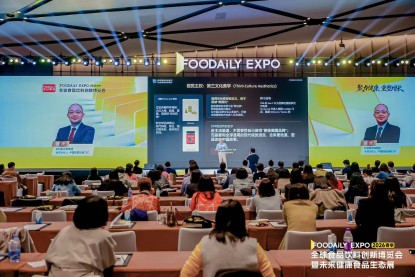
On April 15th, Dr. Tiger Cao, Global Partner of Kotler Marketing Group (KMG), attended and delivered a speech at the “2026 Global Food and Beverage Innovation Expo," themed “A Paradigm Shift in the Globalization Strategy of Chinese Food Companies." In his speech, Dr. Cao clearly proposed a “new mindset for Chinese food going global," the core of which lies in shifting from the traditional “low-price export" model to one centered on cultural confidence, product quality, and localized operations—“reshaping global consumers’ new understanding of Chinese food."
This article summarizes the key points from the presentation.
—Kotler Growth Lab
I. Why is going global a necessity now?
01. The fundamental difference between "exporting" and "going global":
- Export formula: Overseas price - (Local production cost × Exchange rate + Tariff). Essentially cost-driven, it is heavily influenced by tariffs and exchange rate fluctuations.
- Going global formula: Overseas price - Overseas production cost (including services, R&D, etc.) / Exchange rate. Essentially localized value creation, avoiding tariffs, and deeply integrating into the local market.
02. The three key characteristics of
"Global 2.0" explain why the old export model is unsustainable and a
shift towards overseas markets is necessary.
- Shortened supply chain: Production locations are closer to sales locations to overcome regional trade barriers.
- Diversified supply chain: Supply chain diversification avoids putting all eggs in one basket.
- Ecosystem integration: Close collaboration with the local market ecosystem (channels, demand, content) to co-create products.
03. The reality of "scale
domestically, profits overseas":
The intense "involution" in the
domestic market has made overseas markets the main source of profits for many
industries. To maintain a leading position in the domestic market, competitors'
globalization efforts force you to also go global in order to acquire global
scale and innovation capabilities.

II. Global Food Consumption Trends and
Three Core Battlegrounds
01. Key Trends (Four Forces)
- Precision Nutrition: From broad-based supplementation to focusing on specific needs such as gut health and protein bioavailability.
- Clean Labeling: From a differentiating selling point (POD) to a standard market entry requirement (POP).
- Emotional Balance: Food becomes an important medium for bringing "layers of delight" and soothing emotions.
- Cultural Exploration: Food becomes a "flavor journey," especially for "Third Culture Kids."
02.
Analysis of the Three Major Battlefields

Southeast Asia Market: A rapidly growing market with a young population, high digital penetration, and intense cross-channel competition – the "main battleground." Halal certification has evolved from religious compliance to a value label representing "safety, cleanliness, and reliability," making it crucial for market entry. The strategy often follows a path of "online explosive growth (e.g., Shopee, TikTok Shop), followed by deep offline cultivation."
US Market: The world's largest and most premium market, with Asian food growth four times that of packaged foods overall. The core opportunity lies in "mainstreaming ethnic foods," that is, moving Asian foods from specific supermarket shelves to mainstream channels. Success hinges on the purchasing power and trendsetting influence of the "AANHPI" (Asian Americans, Native Hawaiians, Pacific Islanders) demographic.
European Market: A high-value market, but with extremely high barriers to entry. The
core challenge lies in meeting stringent ESG, green labeling, and supply chain
transparency requirements.
III. Winning Mindset and Action
Framework for Chinese Food Products Going Global
01. Identity Expression:
- Reject Cultural Downgrading: Don't pretend to be an American brand. Instead, use a globally recognized modern visual language to sincerely and concretely express your Chinese identity (e.g., Sichuan, Ningbo, Henan spicy soup), achieving "cognitive value enhancement."
- Case Study: Through content storytelling, turn frozen xiaolongbao (soup dumplings) into an entry point for American children to experience local Chinese culture.

02. Texture Anchor Point:
Sensory Hook Revolution: Using the unique "sensory qualities" of Chinese food (such
as chewy texture, bouncy feel, and non-sticky texture) as the core selling
point, upgrade Americans' perception of taste (from traditional crispness and
creaminess to multiple sensory dimensions). This is the biggest opportunity to
build a product with high tactile recognition.

03. Five Key Directions for the Next
Three to Five Years:
- Internationalization of Chinese Herbal Functions (Food as Medicine).
- Supply Chain Capabilities Driving Global Lower-Tier Markets.
- The Rise of Third-Culture Among Asian Communities.
- Smart Packaging and Transparent Supply Chains.
- Instant Retail and Delivery Capabilities (Exporting China's Advantages).

IV. Three Implementation Suggestions for
Chinese Enterprises
NO.1 Reject Cultural Downgrading:
Express your cultural identity authentically, honestly, and boldly. Respond to the social sentiment represented by Merriam-Webster's 2025 keyword of the year, "Slop" (referring to the rejection of elaborate falsehood and the need for raw, honesty).
NO.2 Use Texture as a New Anchor Point:
Make unique taste and sensory experience the core of product differentiation.
NO.3 Implement Direct Sourcing and Transparency:
Establish a fully traceable Clean Label
system; this is the foundation for cooperation in mainstream European and
American channels.

Key Action Points Summary
1. Reassess Your Globalization Strategy: Immediately examine your current international business using the "export formula" and the "going global formula." Determine if you are still focused on cost-based trade, or if you have begun creating value for local markets. Because "exporting and going global are completely different strategic choices for businesses."
2. Infuse Your Brand with a Specific Cultural Identity: Stop using vague "Asian flavor" or imitating Western designs. Choose a specific regional or cultural symbol that represents your roots (such as Sichuan, Fujian, or the concept of food and medicine sharing the same origin), and repackage it with modern visual language. "Be authentically express who you are."
3. Conduct a "Texture Audit" and Upgrade: Organize team tasting sessions to focus on analyzing the product's "sensory" characteristics such as taste, texture, and chewiness. Clearly list these unique "textures" as core selling points and highlight them in marketing materials. Because "using texture as a new anchor point" is the greatest opportunity to build high brand recognition.
4. Conduct in-depth research on the
"key demographics" of the target market: If targeting the United States, it is essential to conduct in-depth research on
the media habits, cultural preferences, and consumption behaviors of the AANHPI
demographic. If expanding into Southeast Asia, obtaining Halal certification
and building a "clean and honest" brand narrative around it must be
prioritized as the highest priority.
5. Initiate Supply Chain Transparency: Immediately begin planning a full-chain traceability system for your products, starting even from core raw materials. This is a fundamental capability to meet ESG requirements in European and American markets and gain recognition from mainstream channels, as well as a concrete action to fulfill the "clean label" commitment.
6. Enhance Cognition Through Content: Plan content that doesn't aim for hard selling, telling the story of your ingredients, craftsmanship, or cultural origins. Use short videos, blogs, and other formats to gently educate overseas consumers, similar to the case of "making xiaolongbao a cultural entry point."
7. Remember the Time Window: Shorten the five-year warning of Philip Kotler, the father of modern marketing and founder of Kotler Consulting, to three years, setting clear milestones and performance targets for overseas expansion. The AI era is accelerating change; "If you're still doing business the same way, you're not far from closing down."