
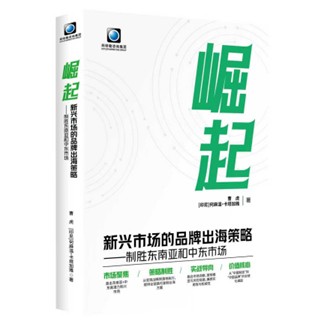
Chinese companies are tapping into the Southeast Asia and Middle East markets, how can they win the battle of localized marketing? Dr. Tiger Cao, global partner of Kotler Marketing Group (KMG), and Hermawan Kartajaya, founder of KMG ASEAN and MCorp, have teamed up to create the book "Rise" on Chinese corporate ventures, which provides authoritative real-world guidance for venture capitalists.
This book is based on two major gold export markets, which directly hit the core pain points such as cross-cultural adaptation, brand landing, and local growth. It integrates Kotler’s 100-year marketing system with first-hand practical experience, and dismantles the methodology of export marketing that can be directly reused. From strategic planning to implementation, from market insights to localized innovation, we help enterprises bypass misunderstandings and solve problems with precision.
The book “Rise" is coming out in May 2026. Stay tuned!
——The Kotler Growth Lab
On the streets of Riyadh, where temperatures reached 45°C, the heatwave from the sandstorm was intense.
Zhang Shichao, a post-90s shop owner, stood inside his shop, wiping the sweat from his brow, watching the long queue outside, and clutching the orders in his hand.
The orange and white shop sign featured the four Chinese characters for "Shaxian Snacks" alongside Arabic script, creating a striking contrast. In the semi-open kitchen, steaming, handmade noodles wafted through the air, their aroma mingling with the scent of coconut – this was the real scene at the opening of Shaxian Snacks' flagship store in Saudi Arabia in May 2025.

Photo: Shaxian Snacks' first store in
Riyadh
From Riyadh to Dubai, from Cairo to Abu Dhabi, an increasing number of Chinese brands are breaking free from geographical and cultural constraints, taking root and flourishing in this land nourished by oil and steeped in religion.
Among them are entrepreneurs carrying samples through Middle Eastern business districts, R&D teams braving wind and sand to fine-tune products, and operations staff working tirelessly to achieve halal certification. The rise of these Chinese brands are not accidental, but rather the inevitable result of finding their niche amidst cultural clashes and constantly breaking through barriers through trial and error.
The Middle East, once considered a "niche market," is now becoming a new hotbed for Chinese brands going global.
Saudi Arabia's "Vision 2030" has driven profound socio-economic transformation. After lifting traditional restrictions such as women driving, female labor participation has increased from 22% in 2017 to over 35%, unleashing enormous consumption potential. With a high GDP per capita in the Gulf states, Saudi Arabia boasts a per capita purchasing power of approximately $60,000, leading to strong demand in sectors such as fashion, beauty, and automobiles. Internet penetration exceeds 90%, and the high proportion of young people provides fertile ground for digital retail and new consumer brands. Furthermore, its geographical advantage as a hub connecting Eurasia and Africa serves as a springboard for brands to expand into markets across three continents. More importantly, while the Southeast Asian market is becoming increasingly saturated, the Middle Eastern market still presents numerous supply gaps, offering opportunities for Chinese brands to break through.
This article will analyze several case studies of Chinese brands to uncover the secrets to their rise in the Middle Eastern market, summarizing replicable experiences and lessons learned, providing guidance for more companies venturing into the Middle East.
I. From Parallel Exports to Brand Globalization: The Middle East Adventures of Chinese Automakers
The road to the Middle East has never been smooth sailing. This market, seemingly brimming with opportunities, presents numerous challenges, such as religious taboos, differences in consumer habits, supply chain weaknesses, and fierce market competition. Like hidden reefs in the desert, these challenges constantly test every Chinese brand venturing into the region.
In the Middle Eastern automotive market, the rise of Chinese brands can be described as a breathtaking "comeback battle."
Taking the automotive industry as an example, in the early days, Chinese cars entered the Middle East with a somewhat "wild growth" tenacity—traders relied on the "parallel export" model, registering new cars domestically and then shipping them overseas as used cars, profiting from price differences in different markets and earning their first fortune in the Middle East. Those who entered early could even enjoy profit margins as high as 30% per vehicle. This allure attracted more Chinese car dealers to this desert land.
But behind this "wild growth" lay hidden dangers.
As more and more Chinese car dealers flood into the Middle East, vicious competition has quietly emerged. The result of this price-cutting is a sharp decline in profits—from several thousand US dollars in the early days to sometimes less than $100. The once "blue ocean" has gradually turned into a "red ocean" of fierce competition. What's even more worrying is that this model itself is full of uncertainties: the policies of Middle Eastern countries are constantly changing, and a slight misstep could leave cars stranded in ports, resulting in huge losses. If parallel exports infringe on the interests of local authorized dealers, they may be reported, leading to customs clearance and registration problems, and years of hard work could be wasted.
Besides the inherent shortcomings of its business model, Chinese automakers face two major obstacles: fierce market competition and stringent localization requirements.
Following the pandemic, traditional Japanese and Korean giants like Toyota and Hyundai have redoubled their efforts, continuously introducing new models and optimizing services to aggressively compete for market share in the Middle East. For many consumers, Chinese brands remain a "second choice," making their survival pressure immense.
More importantly, the Middle East's climate and road conditions are highly unique. Summers in countries like Saudi Arabia are extremely hot, placing high demands on vehicle heat resistance and tire durability. Simultaneously, Middle Eastern consumers have very strict requirements for after-sales service and parts supply. Compared to Japanese and Korean brands that have cultivated the market for decades, Chinese automakers' after-sales networks and parts supply capabilities still lag significantly behind. Long spare parts delivery times have become a major source of customer complaints.
Automotive brands and trading companies have not remained passive; instead, they have proactively sought change and embarked on a transformation journey.
On the one hand, established traders are abandoning the "quick money" mentality and focusing on building their core competitiveness. They leverage domestic 4S dealership networks to secure stable, low-priced vehicle supplies, while simultaneously building local teams, showrooms, and after-sales centers in the Middle East. They are immersing themselves in understanding local market demands, expanding their business from simply selling cars to include after-sales service, warehousing, parts supply, and car rental, achieving diversified development.
On the other hand, Chinese automakers like Chery, Geely, and BYD are also accelerating the formation of their "regular army," aggressively entering the Middle Eastern market. By authorizing overseas dealerships, establishing local production bases (although localized production conditions are not yet mature), and launching models adapted to the local market, they are gradually transitioning from "product export" to "brand globalization."

Image: Interior of Geely Automobile's Egyptian factory
To truly integrate into the Middle Eastern market, Chinese automakers have invested heavily in localization.
They have specifically modified their vehicles for the Middle East's high-temperature climate, significantly improving the vehicle's heat resistance and tire durability to ensure stable operation in extreme environments.
Simultaneously, they have thoroughly understood the car-buying habits of Saudi consumers—30%-40% of cars in the region are sold through large car dealerships—and proactively strengthened cooperation with these dealerships, making it easier for consumers to compare prices and make purchases.
Furthermore, the intelligent and connected features of domestically produced new energy vehicles have created a significant competitive advantage, breaking the monopoly of traditional gasoline vehicles, accurately capturing the preferences of young Middle Eastern consumers, and gaining a large following.
Now, the journey of Chinese automakers to succeed in the Middle Eastern market is beginning to bear fruit.
Chery Automobile has deeply cultivated the local market, establishing a large local spare parts warehouse and even thoughtfully developing features adapted to local religious culture—such as an in-car prayer compass—using details to impress consumers and successfully achieving brand upgrading and market expansion. Geely took the lead by introducing electric vehicles to the Middle East market, and Changan followed closely behind, planning to launch electric vehicle products to seize the development opportunities in the Middle Eastern electric vehicle market.
Despite the many challenges ahead, Chinese
automakers, with their high cost-performance ratio and rapid localization
adjustments, are gradually eroding the market share of Japanese and Korean
brands, proving that Chinese brands can also gain a foothold and make a name
for themselves in the Middle Eastern automotive market.
II. Coffee Brands: Breaking Through with Value for Money and Steadily Adapting to the Market
In the Middle Eastern coffee market, Chinese brands are equally competitive.
The Middle East has a deep-rooted coffee culture, with coffee deeply integrated into local daily life. The UAE coffee market is projected to grow at an annual rate of 8.4%. This mature consumer base reduces market education costs for Chinese coffee brands entering the market.
Cotti Coffee is currently the most active Chinese coffee brand in the Middle East and a pioneer among Chinese brands in the Middle Eastern coffee arena. With intensifying competition in the domestic coffee market, Cotti Coffee understands that to achieve a breakthrough, it must accelerate its overseas expansion, and the Middle East, after Southeast Asia, is another emerging strategic location it has targeted.
However, Cotti Coffee encountered two major challenges upon its arrival:
First, local coffee brands had established themselves and already captured the palates of local consumers. Furthermore, Middle Eastern coffee possesses distinct regional characteristics—locals often add local spices, resulting in a unique flavor.
Second, due to religious and cultural influences, alcohol is prohibited in the Middle East. This meant that many creative coffees popular in China, such as those containing alcohol (like Maotai-flavored coffee), were simply impossible to introduce to the Middle Eastern market, significantly increasing the difficulty of product adaptation.
Faced with these difficulties, Cotti Coffee did not blindly follow trends. Instead, it implemented precise strategies, forging a path of "breakthrough through cost-effectiveness + precise site selection + steady adaptation."

Image: Cotti Coffee Middle East Store
In the Middle East, the average price of a freshly made coffee is about 40 RMB. Cotti Coffee proactively lowers its prices, keeping them between 20-30 RMB, quickly attracting consumers and opening up a market niche with its truly competitive price-performance ratio.
Cotti Coffee is very cautious in its location selection, prioritizing Dubai's business districts, such as Business Village, and knowledge parks, such as Dubai Internet City. These areas have a large concentration of white-collar workers, students, and Chinese traders who are familiar with coffee consumption and more receptive to Chinese coffee brands, significantly reducing market cultivation costs.
In terms of product development, Cotti Coffee hasn't rushed things but has taken a gradual approach. Currently, the menu mainly focuses on the popular "milk coffee" style popular in China, catering to the tastes of Chinese and young white-collar workers. At the same time, it is slowly exploring and trying to launch products adapted to Middle Eastern tastes, always adhering to its bottom line and avoiding religious taboos.
Hard work pays off. As of April 2025, Cotti Coffee has successfully opened 7 stores in Doha, Qatar and Dubai, UAE. Although the number is not large, it has already gained a foothold in the Middle Eastern market and taken a solid step.
III. The New-Style Tea Beverage Sector:
Targeting the Blue Ocean Market and Breaking Through with Emotional Economy
The new-style tea beverage market in the Middle East is still in its nascent stage, with development comparable to China a decade ago. This untapped blue ocean holds immense market opportunities and has become a fiercely contested battleground for Chinese tea beverage brands.
Chinese tea beverage brands such as Happy Lemon, Gong Cha, and Heytea have already established a presence in the Middle East. However, the taste preferences and religious taboos of Middle Eastern consumers differ drastically from those in China. How to retain the core characteristics of Chinese tea beverages while catering to the needs of local consumers has become a crucial challenge for every brand.
Middle Eastern consumers generally have a sweet tooth, requiring milk tea to be significantly sweeter than its domestic counterpart. Locals particularly favor brown sugar pearls and creamy milk foam series. Simultaneously, the food supply chain must be halal certified, prohibiting the use of alcohol or ingredients banned under Islamic law; beverages containing fermented rice are absolutely forbidden.
In response, many Chinese tea beverage brands have proactively adapted to local customs. For example, they have optimized the sweetness of their products to suit the sweeter palates of Middle Eastern consumers; they have rigorously selected ingredients, excluding pork-related ingredients to ensure halal compliance; and they have incorporated local fruits to launch tea beverages with a Middle Eastern flair, perfectly blending Chinese tea with local culture.
These are just some of the product-level adaptations made by tea beverage brands. The new brand I'm about to discuss has made even greater innovations in terms of the experience.
WHOA TEA, founded in Saudi Arabia by three Chinese entrepreneurs born in the 1990s, has become a leading tea beverage brand in the region in less than two years. They didn't try to forcefully change local taste preferences, but rather precisely grasped the core need of young people in the Middle East—the lack of offline social interaction.
Following Saudi Arabia's social transformation, young people have a strong need for social interaction, but the supply of offline entertainment is insufficient. WHOA TEA chose to break through by "selling scenarios rather than selling milk tea": incorporating elements such as trendy toys, board games, and excavator games into the stores to create a fresh and exciting gathering space; keenly capturing the influence of K-pop on young Saudi women, attracting nearly 80% of female consumers by holding K-pop-themed events, and turning the stores into gathering places for fan communities.

Image: A WHOA TEA store with an excavator theme, where customers can enjoy tea while playing excavator games.
Cultural resonance marketing has enabled the brand to achieve viral spread.
They launched a promotional item called "Lanunu," which local media dubbed "Labubu's Saudi cousin," inexplicably igniting a sense of national pride among local consumers and driving significant sales growth (it's so similar to Labubu that there may be copyright infringement risks; we do not recommend emulating this).

Image: WHOA TEA's complimentary gift,
Lanunu – "Labubu's Saudi cousin"
Today, Chinese new-style tea beverage brands are gaining momentum in the Middle Eastern market. With their fresh products, diverse choices, and unique oriental charm, they are gradually winning the hearts of young Middle Eastern consumers, gaining increasing recognition, and becoming a bright spot in the Middle Eastern food and beverage market.
IV. Beauty Brands: Overcoming Market Access and Recognition Challenges Through Localization and User Co-creation
Beyond popular sectors like automobiles and coffee/tea beverages, Chinese brands are quietly making steady progress in the Middle East's beauty, baby, and apparel consumer markets. While these brands may not be as well-known as automobile or tea brands, they face even greater challenges—high market entry barriers, low brand awareness, and significant difficulties in local marketing.
The business environment in the Middle East is vastly different from that in China, especially in Saudi Arabia, where policy adaptation barriers are relatively high, making successful entry extremely difficult. Meanwhile, European and American brands have cultivated these sectors for years, establishing deep brand recognition. For Chinese brands, as latecomers, gaining the trust of local consumers and breaking the monopoly of European and American brands is incredibly challenging.
Faced with these difficulties, they did not back down but instead developed a breakthrough strategy of "localization cooperation + offline cultivation + precise marketing," gradually opening up the market.
At beauty counters in Saudi Arabia, SHEGLAM products consistently attract young women. This makeup brand, originating from SHEIN, didn't blindly follow the trend of entering the fiercely competitive European and American markets. Instead, it precisely targeted the "blue ocean" of the Middle East. At the time, the Middle Eastern beauty market was dominated by high-end international brands, while low-priced products lacked quality. Local young people, however, sought both trends and value for money, creating a significant market gap.
The brand's primary challenge was adapting to both culture and climate. The hot, dry climate of the Middle East required makeup with strong staying power, waterproofing, and sweatproofing; local consumers also had unique skin tones and aesthetic preferences that differed from those in the European and American markets.
SHEGLAM didn't simply replicate existing products. Instead, it conducted in-depth research into local needs, launching a makeup series tailored to Middle Eastern skin tones, sweat- and oil-resistant, and even incorporating local aesthetic preferences into makeup details.
To quickly integrate the brand into the local market, SHEGLAM abandoned the "international brand" label and adopted a "user co-creation" model: collaborating with local KOLs/KOCs to develop products, launching social media challenges to gather consumer feedback, and releasing customized products in conjunction with festivals like Ramadan. Meanwhile, recognizing the high proportion of beauty and skincare specialty stores and department stores in the Middle East, we actively collaborate with major local retailers such as Saudi Lifestyle and German DM to open dedicated counters and build a collaborative online and offline network.

Image: SHEGLAM counter
The pricing strategy is equally precise, with product prices controlled between $1 and $20, achieving "high-end quality at half price," perfectly catering to the needs of young consumers. Today, SHEGLAM has become one of the fastest-growing mass-market beauty brands in Saudi Arabia, deeply loved by Generation Z, proving the powerful effectiveness of localized operations.
SHEIN, also in the fashion industry, has established a foothold through a differentiated strategy. Facing the market monopoly of European and American brands, SHEIN focuses on the advantages of digital retail, launching a "headscarf paired with clothing" series that aligns with local aesthetics. With high cost-performance and rapidly iterating products, it quickly captures the hearts of young consumers.
V. Core Marketing Strategies of Chinese Brands in the Middle East Market
By analyzing these successful Chinese brands, we can easily summarize their core marketing strategies in the Middle East market, providing valuable experience for more Chinese brands looking to expand into the Middle East and other overseas markets.
A. Precise Positioning, Leveraging Strengths to Break
Through
1、Channel Selection: Prioritize entering blue ocean or high-potential channels.
Chinese brands venturing into the Middle East have avoided blindly following trends. Instead, they have strategically targeted mature markets dominated by European, American, Japanese, and Korean brands, precisely focusing on untapped growth areas such as innovative tea drinks or high-potential sectors like new energy vehicles and coffee. Leveraging their established strengths in China, they have achieved rapid market breakthroughs. Furthermore, by considering the climate and cultural characteristics of the Middle East, they have chosen highly adaptable product categories, such as cost-effective consumer electronics and food and beverage products that align with local consumption habits. This has effectively reduced market cultivation costs and accelerated brand establishment.
2、Model Adaptation: Flexible selection of overseas expansion models for gradual upgrades.
In the early stages, Chinese brands, unfamiliar with the Middle Eastern market, mostly adopted asset-light models such as "parallel export" and "agency cooperation" to lower market entry barriers, quickly test the market, and accumulate experience. As their understanding of the local market deepened and their brand strength increased, they gradually transitioned to asset-heavy models such as "authorized distribution + local operation" and "direct sales + localized production," achieving a leap from "simply selling products" to "deep brand cultivation." Simultaneously, based on the characteristics of the Middle Eastern market, diversified operating models were explored. For example, car dealers expanded from simply selling cars to after-sales service and warehousing, improving profitability and enhancing risk resistance.
3、Supply Chain Layout: Leveraging local resources to overcome supply chain weaknesses.
The supply chain is the "lifeline" of a brand's overseas expansion. Businesses need to focus on integrating local supply chain resources in the Middle East to reduce their reliance on domestic exports. This can reduce logistics costs and mitigate the risks brought about by policy changes. At the same time, some strong brands have begun to establish local production bases, such as automobile and seasoning companies, to gradually improve their supply chain systems, enhance the localization of their products and the stability of their supply, and lay a solid foundation for the long-term development of their brands.
B. Localization is King, Precise Targeting
1、Product Localization: Tailoring to Local Needs and Avoiding Cultural Taboos
This is the core prerequisite and the most crucial step for Chinese brands to establish themselves in the Middle Eastern market. For a brand to integrate into the Middle East, it must first respect Middle Eastern culture and consumption habits—thoroughly understanding local consumers' taste preferences, religious taboos, and lifestyles, and making targeted adjustments to products: for example, improving the heat resistance of cars to suit high-temperature climates; avoiding alcoholic ingredients in coffee to uphold religious principles; optimizing the sweetness of tea drinks to suit local tastes. Only in this way can products gain acceptance and recognition from local consumers.
2、Channel Localization: Online and Offline Integration, Deepening Offline Contexts
Given the Middle East's low e-commerce penetration and high offline consumption, companies can prioritize offline expansion, opening physical stores in commercial areas close to their target customer base, creating a high-quality consumer experience, and allowing consumers to experience the brand's charm firsthand. Simultaneously, they should establish a presence on popular local online platforms, such as social media and e-commerce platforms, to achieve online-offline integration and expand brand reach. In addition, by leveraging the strength of local partners and the Chinese community, we can quickly establish local sales channels and achieve rapid market penetration.
3、Localization of Marketing: Adapt to local platforms and leverage local resources.
"When in Rome, do as the Romans do" applies not only to products but also to marketing. Businesses need to abandon domestic marketing strategies and adopt highly localized approaches: First, accurately select popular local social media platforms, such as Snapchat in Saudi Arabia and TikTok in the UAE, to publish content that aligns with local culture and enhance brand exposure; second, collaborate with local creators and KOLs, leveraging their endorsement to quickly integrate into local communities and reach target consumers; third, respect local culture and national pride, employing marketing activities involving locals to bridge the gap with consumers; fourth, abandon price wars, focus on building brand reputation, and accumulate positive word-of-mouth through high-quality products and services.
4、Customer Targeting: Focus on young consumers and tap into their consumption potential.
One of the core advantages of the Middle Eastern market is its extremely high proportion of young consumers, who are the main force in the consumer market and the core growth driver for brands in the future. It is recommended that businesses accurately target this customer group, especially Generation Z, and meet the needs of young consumers with intelligent and personalized products and novel and interesting marketing methods. At the same time, leveraging emerging technologies such as AR to create interactive and gamified consumption experiences will stimulate young consumers' purchasing and social sharing desires, allowing the brand to spread rapidly among young people.
In the future, with the continued opening of the Middle Eastern market and the continuous improvement of the strength of Chinese brands, more Chinese brands will flock to this land of great potential and write their own business stories. Those Chinese brands that can adhere to localization strategies, focus on brand building, and flexibly respond to market changes will ultimately gain a foothold in the Middle Eastern market, shine brightly, become the pride of global Chinese brands, and become an important symbol of Chinese brands going global.